Origins
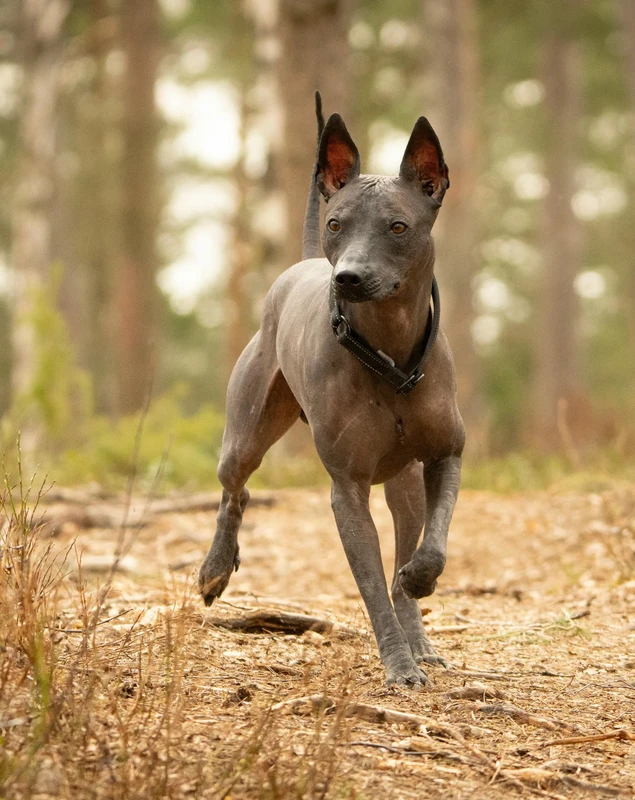
The Xoloitzcuintli, or Mexican Hairless, is one of the oldest dog breeds of the Americas: hairless dogs were kept in Mexico for more than three thousand years. The Aztecs named them after the god Xolotl and believed they guided souls, and they also served as healers and companions. The breed nearly disappeared in the twentieth century and was saved by Mexican breeders from the 1950s. Mexican cynology recognised it in 1956, and it is now bred in three sizes with both hairless and coated dogs.
Lifestyle
Walks: About an hour a day of walking and play. In sun, protect hairless skin, and in cold weather give it a coat.
Being alone: It bonds closely with its family and does not like long hours alone. Company and a routine keep it calm.
At home: Calm, clean and quiet indoors. It likes warm places, often in a lap, bed or in the sun.
Children: Gentle and loyal with its family's children, though it may be reserved with unfamiliar ones. Teach children to stroke it gently and never to pull at its skin, and let it come to them in its own time.
Other animals: Typically fine with dogs it knows, and a strong chase instinct means small pets need caution. Introduce new dogs calmly, and keep it on a lead around rabbits, birds and other small animals outdoors.
Play and activities: Walks, trick training, agility and scent games. It learns quickly with gentle, positive training.
Daily routine: Calm mornings and evenings with long rests. A regular routine helps.
Care essentials
Practical advice, not a medical opinion. For any health question, ask your vet.
Coat: A coated dog only needs brushing once a week. Bathe a hairless dog with a mild shampoo for sensitive skin and afterwards apply a moisturiser suitable for dogs.
Worth knowing: A hairless Xolo needs skin care: wipe it, moisturise dry skin and protect it from sun and cold. Make sure the skin does not dry out.
More about everyday health in the dog health & care guide.
Fun facts
Among the Aztecs the Xolo was considered a guide of the souls of the dead to the underworld. The breed's name is linked to the god Xolotl, who was depicted in the form of a dog.
The Pixar film "Coco" introduced the breed to audiences around the world through Dante, a cheerful hairless dog that resembles a Xoloitzcuintli.
Both hairless and coated puppies can be born in the same litter. The skin of hairless dogs feels warm to the touch because no coat covers it, but their body temperature is the same as in other dogs.
FAQ
This breed is a great fit if you
- Want a calm, loyal, quiet indoor companion
- Are happy to look after skin or give a coat
- Are active enough for daily walks and play
- Want little shedding
It may not be a fit if you
- Are away from home most of the day
- Live in a very cold climate and don't want coats
- Want a dog that welcomes strangers
- Do not want to manage skin care or sun protection
Is it suitable for allergy sufferers?
Heavy shedding. No dog is completely hypoallergenic: allergens come from saliva, skin and dander, not only from hair. Reactions are individual, so spend time with the dog before you decide and talk to an allergist if you are unsure.
Which breeds are similar to Xoloitzcuintli?
Chosen from all groups: breeds of the same size, ordered by how closely their coat length, coat type and activity level match. The notes show how each breed differs from this one.
- Azawakhheavier
- Shar Peiheavier
- American Pit Bull Terriermore energetic, heavier
- American Staffordshire Terriermore energetic, heavier
- Basset Houndcalmer, heavier
Compare Xoloitzcuintli with another breed
Which other breeds might suit me?
Visit the Breeds page: with the filters and the quiz there you can get to know the breeds better.