Origins
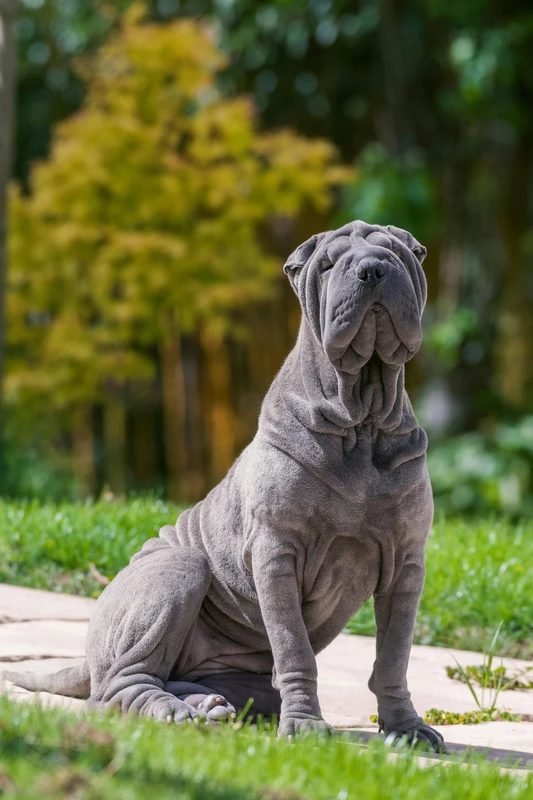
The Shar Pei is an ancient Chinese breed from the southern province of Guangdong, where dogs with loose, wrinkled skin and a blue-black tongue were kept for hunting, herding and guarding. The breed nearly disappeared after the Chinese revolution, and in the 1970s only a small number remained in Hong Kong and Macau. Breeders rescued it with help from the Hong Kong Kennel Club, and the Shar Pei was recognised in the United States in 1991. It is now kept chiefly as a companion dog.
Lifestyle
Walks: About an hour a day, in two walks. It likes a steady pace and sniffing around, and dislikes heat and rain. Keep it on a lead around unfamiliar dogs.
Being alone: It can manage a few hours alone when used to it, but is a family dog. Boredom shows up as chewing or digging.
At home: Quiet and tidy in the house. It likes a favourite spot near the family and does not bark much, though it watches everything.
Children: Loyal and calm with children it knows. Teach small kids to treat it gently, since it dislikes rough handling.
Other animals: Often reserved with unfamiliar dogs, and some are dominant. It can live with other pets if raised together.
Play and activities: Short walks, simple games and puzzle toys suit it. Training should be consistent and rewarding, as it is independent and does not like repetition.
Daily routine: A quiet, regular routine: two walks, meals and long rests. It likes a calm household and a predictable day.
Care essentials
Practical advice, not a medical opinion. For any health question, ask your vet.
Coat: Brush the short, harsh coat once a week.
Ears, paws and teeth: Wipe the skin folds on the muzzle and body and dry them well, especially after rain or a bath. Check the folds around the eyes and nose with particular care.
Worth knowing: Choose a mild shampoo for sensitive skin.
More about everyday health in the dog health & care guide.
Fun facts
In 1978 Guinness World Records named the Shar-Pei the rarest dog breed in the world. At that time the breed really was on the verge of extinction.
The name "Shar-Pei" translates from Chinese as "sand skin". It refers to the short, harsh coat that feels like sandpaper.
Like the Chow Chow, the Shar-Pei has a blue-black tongue. This pigmentation is considered one of the distinguishing features of both breeds.
FAQ
This breed is a great fit if you
- Want a calm, loyal, clean dog
- Are patient and consistent with training
- Enjoy relaxed walks
- Are at home for a good part of the day
It may not be a fit if you
- Want a dog that welcomes every stranger
- Live in a very hot climate
- Are away from home most of the day
- Do not have time to care for the skin folds
Is it suitable for allergy sufferers?
Heavy shedding. No dog is completely hypoallergenic: allergens come from saliva, skin and dander, not only from hair. Reactions are individual, so spend time with the dog before you decide and talk to an allergist if you are unsure.
Which breeds are similar to Shar Pei?
Chosen from all groups: breeds of the same size, ordered by how closely their coat length, coat type and activity level match. The notes show how each breed differs from this one.
- Azawakhvery similar overall
- Xoloitzcuintlilighter
- American Pit Bull Terriermore energetic, sheds less
- American Staffordshire Terriermore energetic
- Basset Houndcalmer, barks more
Compare Shar Pei with another breed
Which other breeds might suit me?
Visit the Breeds page: with the filters and the quiz there you can get to know the breeds better.