
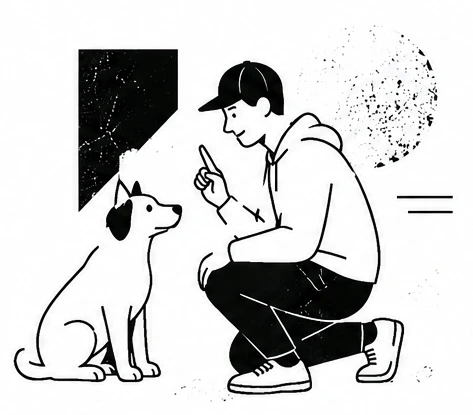
What training actually is
Dog training is the process of building clear communication between human and dog through consistent signals and predictable outcomes. It is not about control, but about establishing shared understanding.
Training influences everyday behavior, safety, and the ability of the dog to function comfortably in human environments.
Consistency and repetition
Dogs learn through repetition and pattern recognition. The same action must lead to the same result in order for learning to stabilize.
Inconsistent rules create confusion and slow down behavioral development.
Clear repetition is more effective than complex commands or frequent changes in approach.
Communication signals
Training relies on clear and simple signals that the dog can associate with specific actions. Timing is important because dogs connect behavior and outcome within a short time window.
Emotional tone, body language, and predictability of response all influence learning speed.
Common learning mistakes
One of the most common issues is mixing signals, where different responses are given for the same behavior.
Another issue is expecting immediate results. Learning takes time and depends on repetition rather than single sessions.
Overloading with commands or complexity can slow progress significantly.
Building reliable behavior
Reliable behavior is achieved through stable routines and predictable outcomes rather than intensity of training.
Small, repeated successes build stronger long-term behavior than occasional intensive sessions.
Conclusion
Training is a communication system that develops over time through consistency and clarity. When properly structured, it creates stability and reduces misunderstandings between dog and owner.