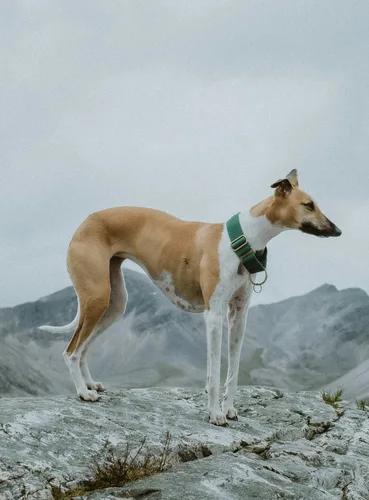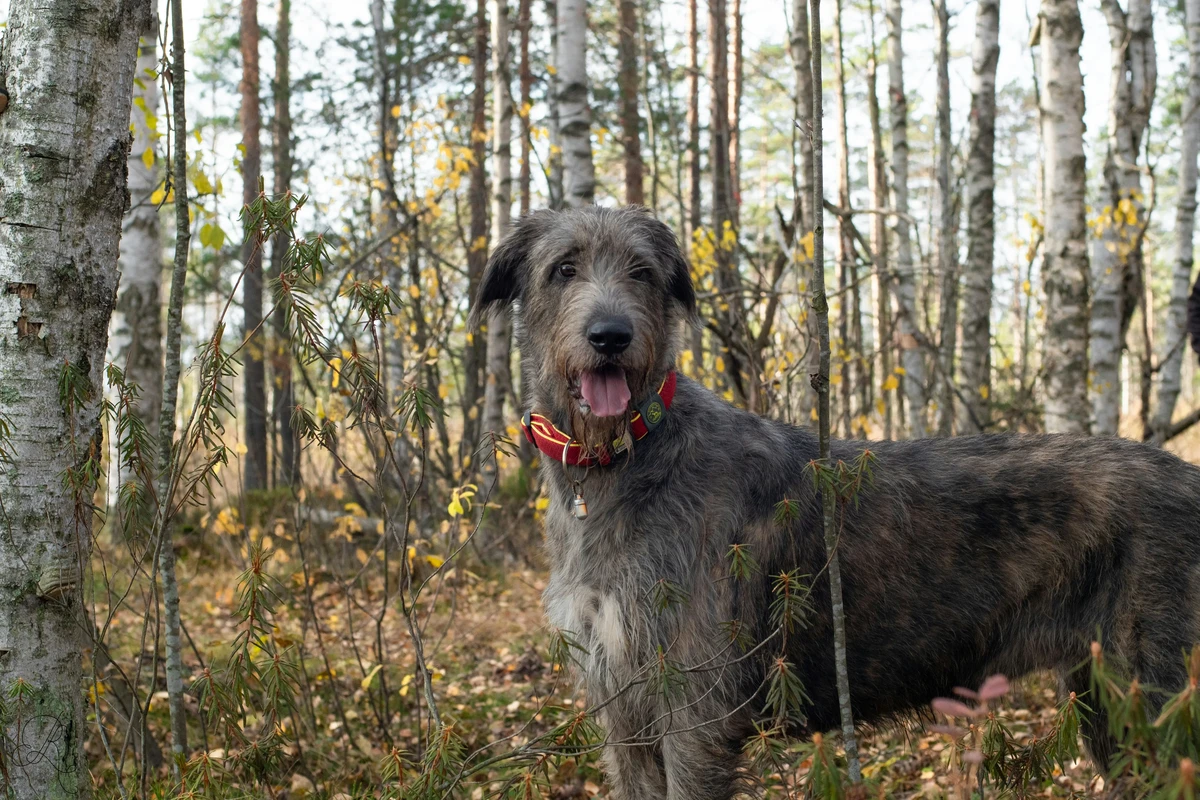
Origins
The Irish Wolfhound is an ancient Irish sighthound used to hunt wolf, elk and boar, and it appears in Irish records and sagas from the first centuries AD. Irish chieftains gave the dogs as gifts to European and English kings, which helped to spread the breed and, later, to deplete it. By the nineteenth century wolves were gone and the breed was nearly extinct; Captain George Graham rebuilt it from surviving lines and similar sighthounds. It was recognised in Britain in 1886 and is the tallest of all dog breeds.
Lifestyle
Walks: An hour and a half a day of walking, with a chance to stretch its legs in a secure area. Do not over-exercise puppies, as their joints are still growing.
Being alone: It does not like long hours alone. It needs space and company, and it may chew if bored.
At home: Calm and gentle indoors, but huge: it takes up the sofa, the bed and half the room. A big, sturdy bed is useful.
Children: Kind and patient with children, though a gentle Wolfhound can accidentally knock over a small child. Teach children to play calmly around it, and keep walks and games gentle, as a giant dog needs space and patience.
Other animals: Usually friendly with dogs. Its chase instinct means small animals are at risk.
Play and activities: Walking, lure coursing and relaxed play. Training is easy-going, but keep it kind and gentle.
Daily routine: A steady walk morning and evening and a lot of sleeping. Give it time to wake up slowly, a gentle morning walk, a long rest and another easy walk in the evening.
Care essentials
Practical advice, not a medical opinion. For any health question, ask your vet.
Coat: Brush the wiry coat once or twice a week and have it hand-stripped a couple of times a year. Trim the hair between the toes so that it does not collect dirt.
Ears, paws and teeth: Check the claws and teeth. Wipe the beard after drinking and eating: it gets wet and smells unpleasant.
Worth knowing: Because of its size, food and vet costs are high, and the breed's life is short, usually six to eight years.
Anesthesia: Sighthounds have little body fat, so they are sensitive to some anaesthetic drugs. Before an operation or any procedure with sedation, remind the vet that you have a sighthound.
Stomach: Large deep-chested dogs can suffer from bloat (gastric torsion). Feed small portions and avoid active play right after meals; a swollen, hard belly, restlessness and unproductive retching are a reason to go to the vet urgently.
More about everyday health in the dog health & care guide.
Fun facts
The Irish Wolfhound is considered the tallest of the sighthounds. The minimum height for males under the standard is 79 cm, and bitches are usually a little shorter.
The breed's name is linked to its historical purpose: Irish Wolfhounds were used to hunt wolves and to protect livestock from predators.
The harsh, shaggy coat, thick eyebrows and beard give the Irish Wolfhound a recognisable look; the colour can be grey, brindle, red, black, white and fawn.
FAQ
This breed is a great fit if you
- Have a large home and a garden
- Want a gentle, calm giant
- Can afford the costs of a giant breed
- Accept a shorter lifespan
It may not be a fit if you
- Live in a small flat
- Have toddlers who might be knocked over
- Have small pets
- Cannot afford the food and vet costs of a giant dog
Is it suitable for allergy sufferers?
Noticeable shedding. No dog is completely hypoallergenic: allergens come from saliva, skin and dander, not only from hair. Reactions are individual, so spend time with the dog before you decide and talk to an allergist if you are unsure.
Which breeds are similar to Irish Wolfhound?
Chosen from all groups: breeds of the same size, ordered by how closely their coat length, coat type and activity level match. The notes show how each breed differs from this one.
- Italian Spinonelighter
- Hungarian Wire-Haired Pointermore energetic, lighter
- English Setterlighter, barks more
- Golden Retrieverlighter
- Akitamore energetic
Compare Irish Wolfhound with another breed
Which other breeds might suit me?
Visit the Breeds page: with the filters and the quiz there you can get to know the breeds better.