Origins
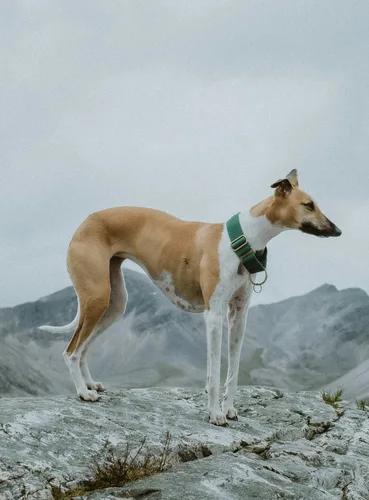
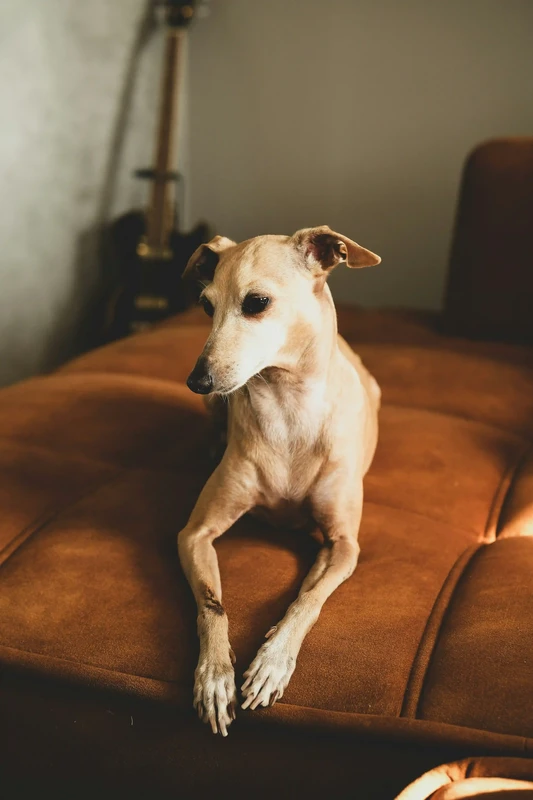
The Italian Sighthound, or Piccolo Levriero Italiano, is a small sighthound that appears in Italian art from the Roman period onward and was kept by noble families across the peninsula. It was used to course hare and rabbit and, above all, served as an elegant companion in the courts of Florence and Milan. The breed was standardised in Italy in 1928, and the first dogs reached Britain in the 1950s. Its fine build and quiet nature make it a popular apartment dog today.
Lifestyle
Walks: About 45 minutes to an hour, with short sprints in a fully enclosed area. On walks keep it on a lead: it chases everything.
Being alone: It bonds closely and dislikes being left alone. It may fret or chew without company.
At home: A cuddly, warmth-loving lap dog that burrows under blankets. It sits on the sofa as if it owns it.
Children: Best with calm, careful older children. Its legs are thin and can break, so rough play is risky.
Other animals: Often friendly with dogs and cats it knows. It may chase small animals outdoors.
Play and activities: Short sprints, tricks and gentle games. It is sensitive, so use praise and treats.
Daily routine: Short walks, play and long naps in a warm spot. A warm bed, a cosy blanket and two short outings with a sprint in a safe place make a good day for this little hound.
Care essentials
Practical advice, not a medical opinion. For any health question, ask your vet.
Coat: The short, fine coat only needs wiping down once a week. Bathe in a warm room and dry off at once: the Italian Greyhound gets cold quickly.
Ears, paws and teeth: Clean the teeth every day: the breed often has dental problems. Trim the claws carefully, the paws are delicate.
Worth knowing: It feels the cold, so it needs clothes and a warm bed.
Anesthesia: Sighthounds have little body fat, so they are sensitive to some anaesthetic drugs. Before an operation or any procedure with sedation, remind the vet that you have a sighthound.
More about everyday health in the dog health & care guide.
Fun facts
The Italian Greyhound is the smallest of the sighthounds. Despite its miniature size, it has kept the build characteristic of the Greyhound: a deep chest, long legs and a flexible back.
Because of its thin skin and short coat, the Italian Greyhound gets chilly and needs clothes in winter.
Italian Greyhounds love warmth: they often burrow under a blanket or warm themselves next to a person.
FAQ
This breed is a great fit if you
- Want a small, affectionate, clean companion
- Are home often
- Can offer a warm bed and coats
- Can handle a fragile dog gently
It may not be a fit if you
- Have young children who may handle it roughly
- Live in a cold climate and don't want coats
- Want a dog that is easy to house-train
- Cannot offer a fully fenced place
Is it suitable for allergy sufferers?
Noticeable shedding. No dog is completely hypoallergenic: allergens come from saliva, skin and dander, not only from hair. Reactions are individual, so spend time with the dog before you decide and talk to an allergist if you are unsure.
Which breeds are similar to Italian Sighthound?
Chosen from all groups: breeds of the same size, ordered by how closely their coat length, coat type and activity level match. The notes show how each breed differs from this one.
- Brussels Griffonvery similar overall
- Dachshundheavier
- French Bulldogheavier, quieter
- Pugheavier, quieter
- Beaglemore energetic, heavier
Compare Italian Sighthound with another breed
Which other breeds might suit me?
Visit the Breeds page: with the filters and the quiz there you can get to know the breeds better.