Summary
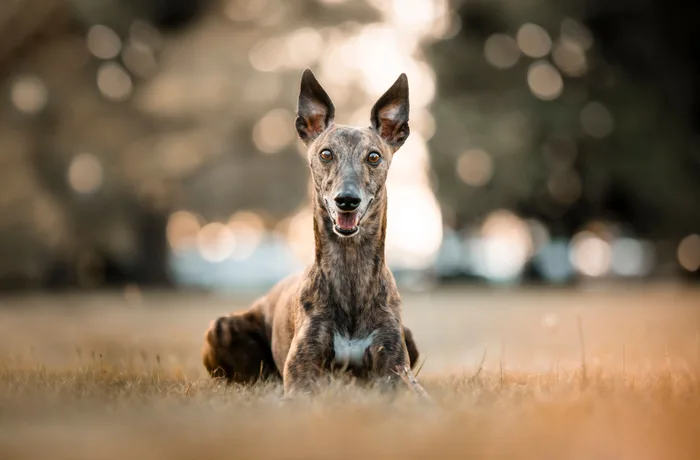
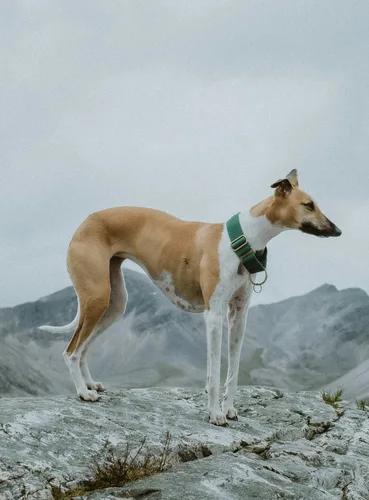
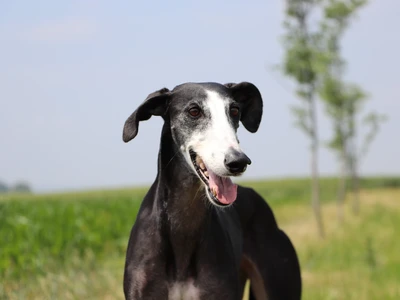
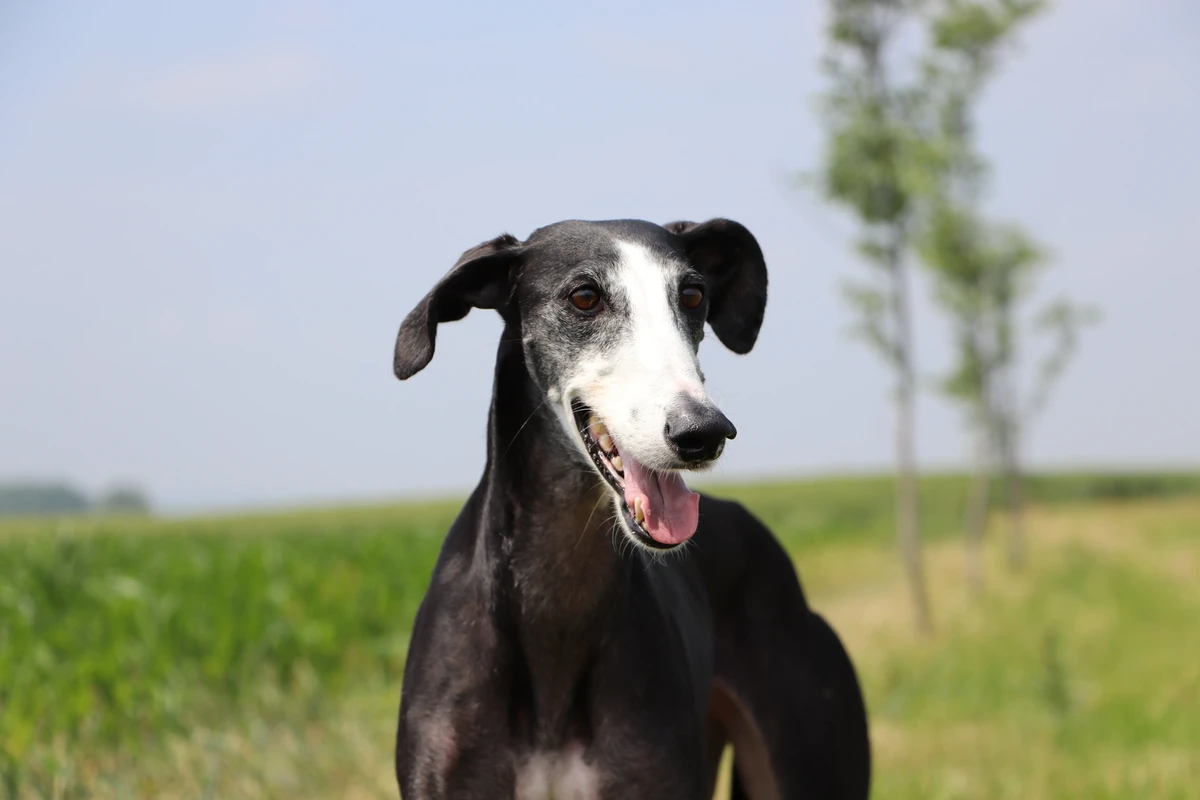
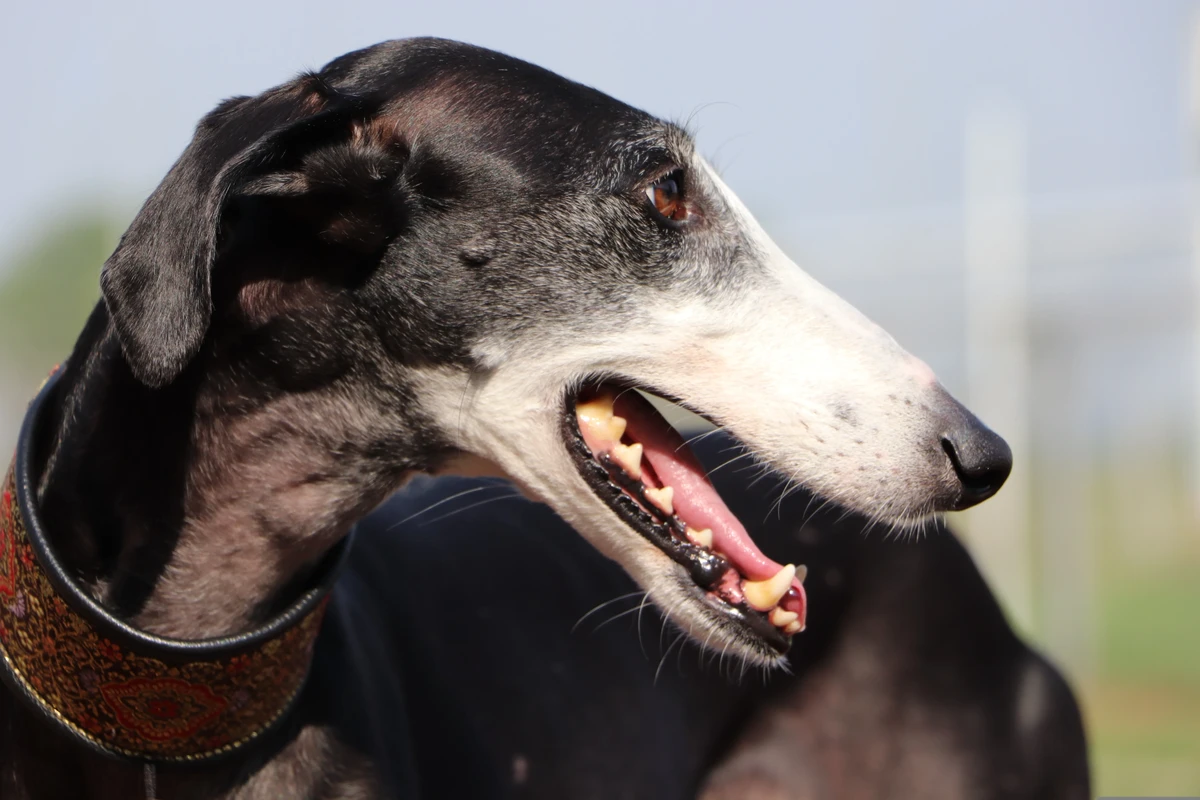
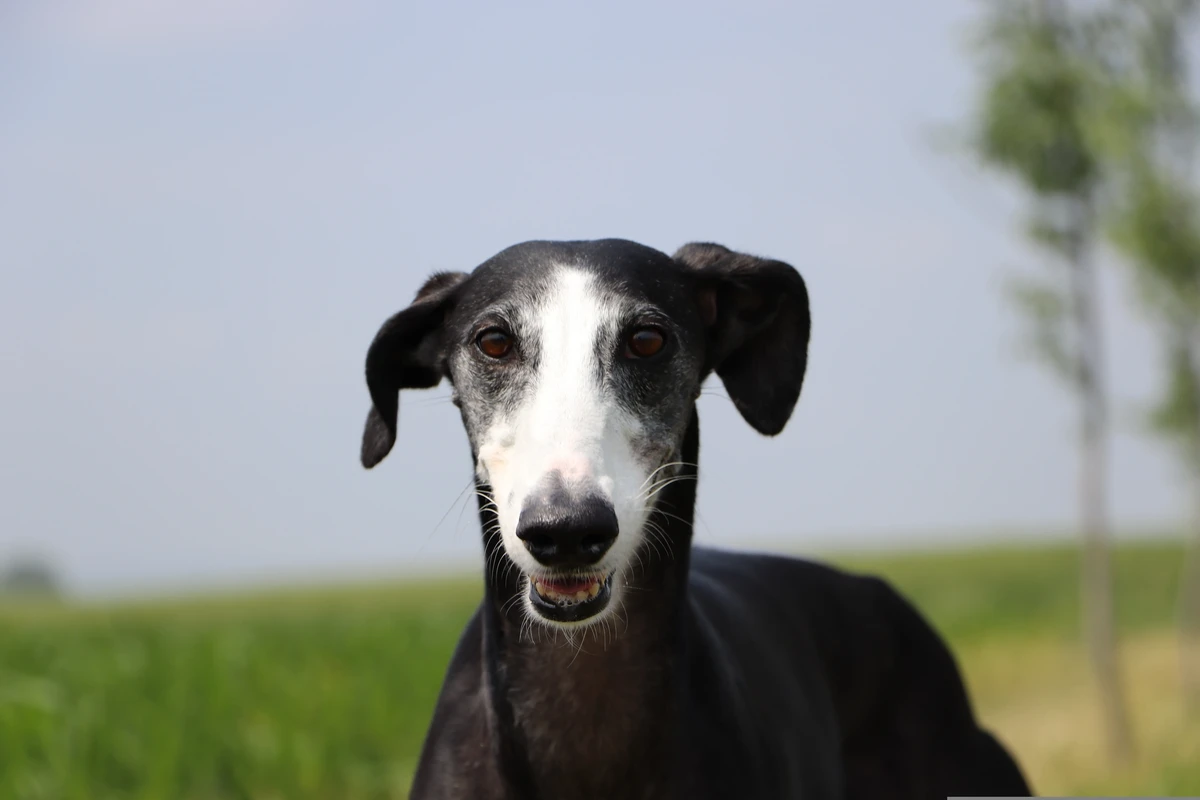
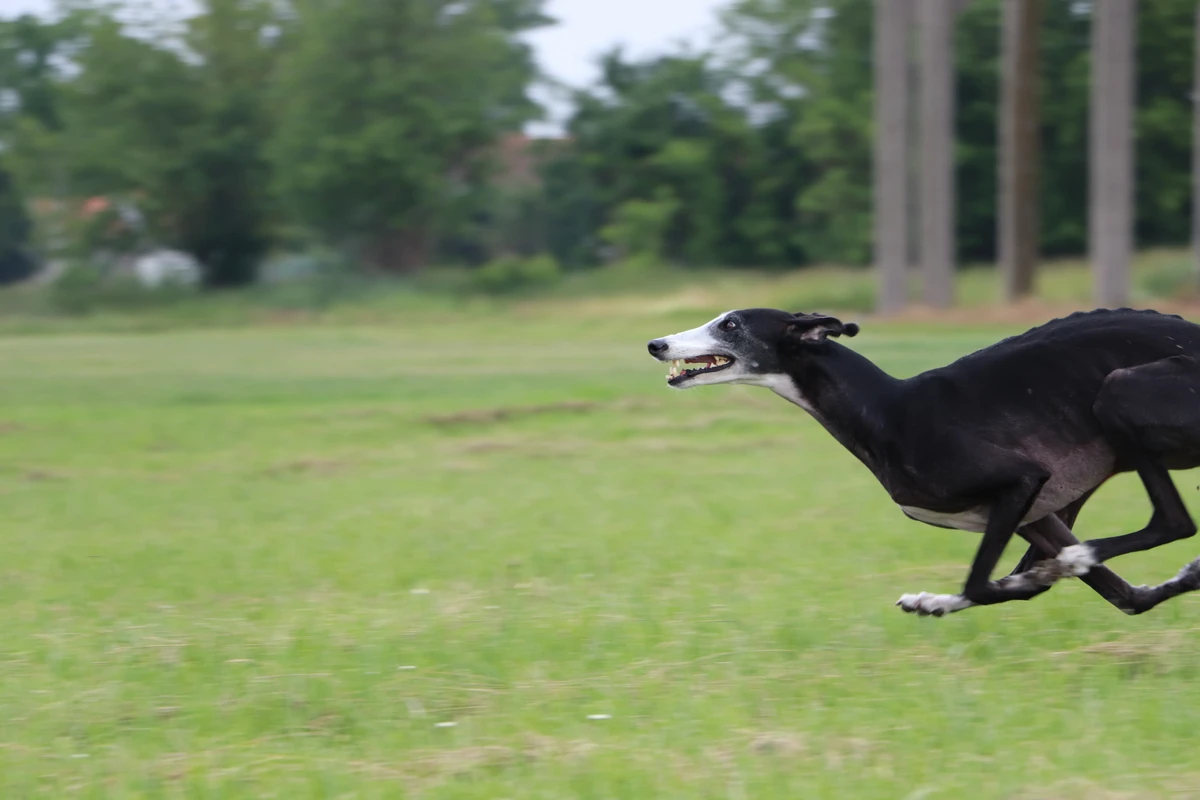
The Galgo Español is the hare-coursing sighthound of the Castilian plains: lighter, flatter-muscled and a little smaller than the English Greyhound, with a very long narrow head and a croup carried higher than the withers. It was bred for endurance rather than one explosive sprint, so it can gallop for kilometres over dry open ground — and then sleep the rest of the day on something soft. Serious and reserved with strangers, it is deeply affectionate with its own people and gentle indoors. Independent and sensitive, it answers to patience rather than pressure, and it feels the cold, the noise of a city and any sharp word more than most breeds do.
History & origin
Long-legged, narrow-muzzled coursing dogs were running the Iberian Peninsula before the Romans arrived: the Celtic vertragus described by Arrian and Martial two thousand years ago was already used for hare, and Arrian mentions both smooth- and rough-coated types. Sloughis brought by the Moors are thought to have been crossed in later, and by the Middle Ages the Galgo was a nobleman's dog — charters from Salamanca, Cuenca and Molina set fines for anyone who killed or stole one, and a will from 1081 leaves «a black Galgo with patches of silver». The breed kept its work on the plains of Castile, La Mancha and Andalusia, where it hunted hare by sight across open country, and the FCI gave it a standard in 1972. In the twentieth century Galgos were crossed with English Greyhounds to produce faster track racers, an experiment that was soon abandoned; today the breed is known less for racing than for the rescue shelters that rehome it.
Care
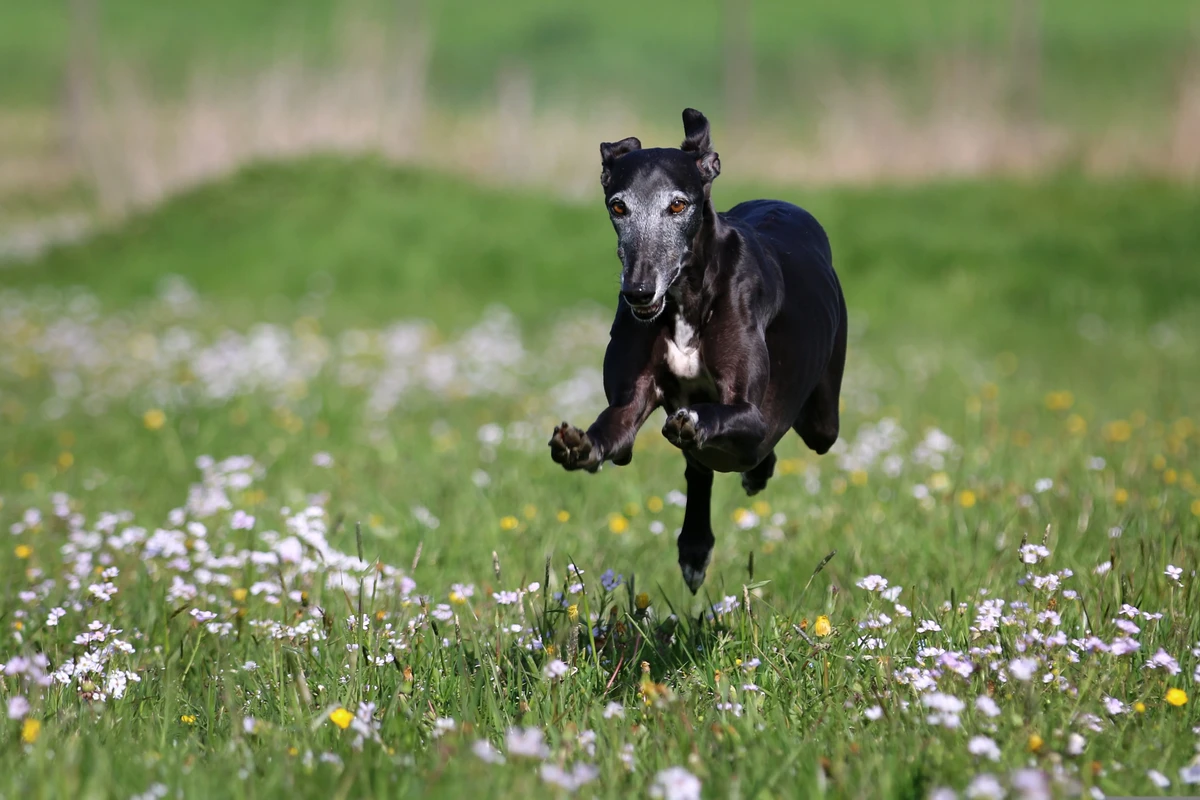
The short, fine coat asks almost nothing: a weekly rub-down with a rubber brush or a chamois, the occasional bath, and regular attention to ears, nails and teeth. The skin is thin and tears easily, so check small cuts after running on rough ground, and remember that sighthounds are unusually sensitive to anaesthesia — say so before any surgery. A Galgo needs real exercise rather than a long slow walk: a daily outing plus the chance to gallop in a safely fenced field, ideally wearing a muzzle in open country, since the chase instinct switches on the moment something runs. The dogs are clean, quiet and easy to house-train, but they feel the cold, so a coat in winter and a soft bed away from draughts are not luxuries.
Conditions
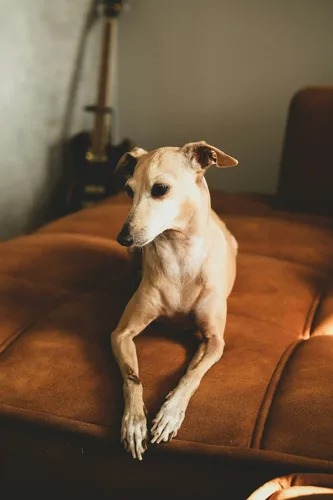
A Galgo can live happily in a flat. It is a sprinter, not a dog that paces the house all day, and it will sleep up to eighteen hours out of twenty-four if the sofa is warm. What it cannot do without is a secure place to run every day — a Galgo that never gallops becomes tense and destructive. It is gentle with children who respect its space, usually tolerant of other dogs, and should live indoors with its family rather than in a kennel or yard, being thin-skinned and thin-coated. Cats and small pets need careful introduction, and the garden fence has to be high and solid: a sighthound can clear a low wall and be gone before anyone hears it.