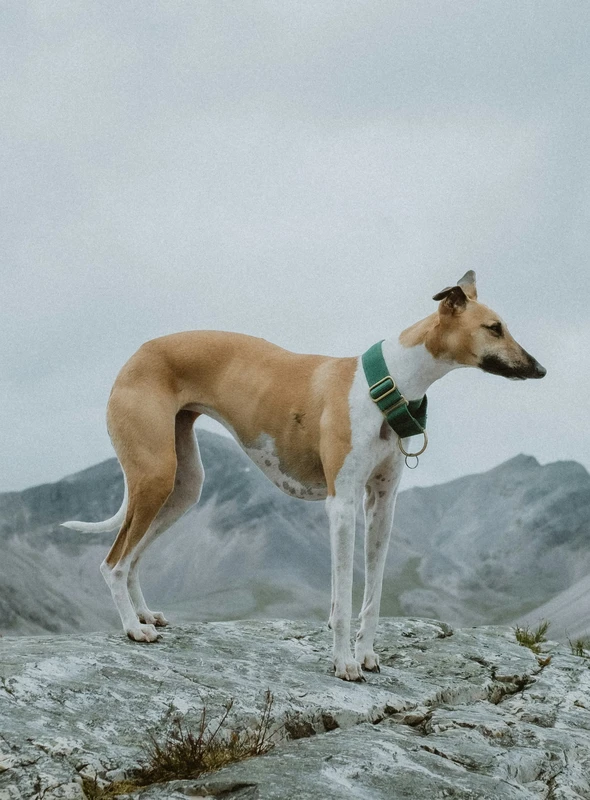
Origins
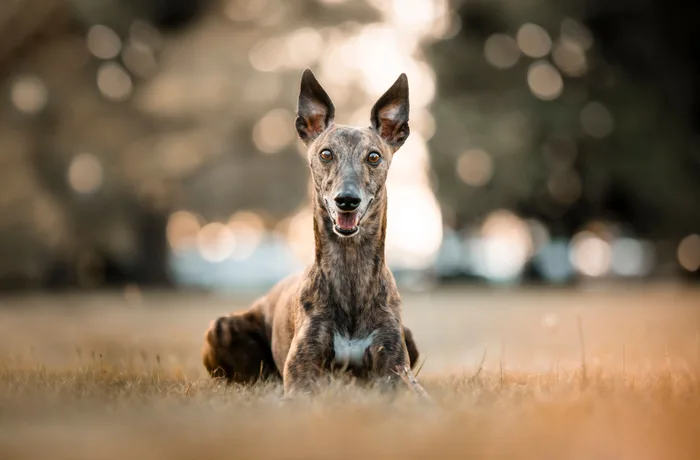
The Whippet comes from the north of England, where nineteenth-century miners bred a small, quiet sighthound they could keep in a small house and race on a straight track after work. It was crossed from greyhounds and terriers and was used to course rabbits, an activity called snap-dog. Racing clubs appeared in the 1890s, and the Whippet was recognised in Britain in 1891. It is the fastest dog of its size and one of the calmest indoors.
Lifestyle
Walks: About an hour a day, including a sprint in a fully enclosed area. In open areas keep it on a lead, as it chases anything that moves.
Being alone: It dislikes being left alone for long hours and may fret or chew. Company helps.
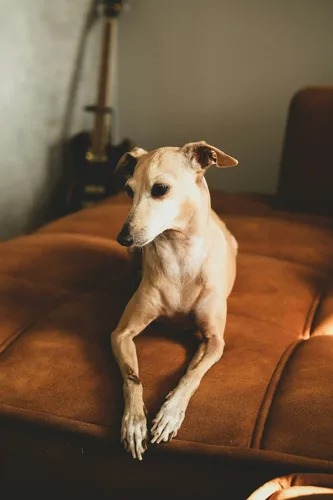
At home: A cuddly, quiet housemate that curls up under blankets and loves a soft sofa. It is very clean.
Children: Gentle and playful with calm children. Its thin legs and skin need respect.
Other animals: Usually friendly with dogs, especially other Whippets. Cats and small pets may be at risk.
Play and activities: Sprinting, lure coursing, agility and long walks. It learns well with praise and treats.
Daily routine: A good run morning and evening and long, warm naps. A brisk walk and a sprint in the morning, a long nap in a warm spot and another outing in the evening suit it well.
Care essentials
Practical advice, not a medical opinion. For any health question, ask your vet.
Coat: The short, fine coat only needs rubbing down with a mitt once a week. Bathe rarely.
Ears, paws and teeth: Check the claws and teeth.
Worth knowing: It feels the cold, so it needs clothes and a warm bed. The thin skin on the belly and flanks is easily scratched by branches, so check it after walks.
Anesthesia: Sighthounds have little body fat, so they are sensitive to some anaesthetic drugs. Before an operation or any procedure with sedation, remind the vet that you have a sighthound.
More about everyday health in the dog health & care guide.
Fun facts
The Whippet can reach a speed of about 55–60 km/h, so it is considered one of the fastest dog breeds. Over short distances it can accelerate sharply, like a sprinter.
Whippets are known as "cat-like dogs": they love to curl up on soft sofas, warm themselves under a blanket and spend time in comfort. Unlike many other sighthounds, the Whippet often adapts well to flat life: at home it is usually calm and rests a lot, and it burns off its energy on walks and while running.
Whippets take part in coursing competitions: they chase an artificial lure that moves across a field and imitates a running hare. This lets them express their natural hunting instincts without live quarry.
FAQ
This breed is a great fit if you
- Want a gentle, clean and quiet dog
- Can offer a safe place for sprints
- Enjoy lure coursing or racing games
- Are home often
It may not be a fit if you
- Have small pets such as cats or rabbits
- Want a dog that recalls reliably off lead
- Live in a cold climate and don't want coats
- Are away from home most of the day
Is it suitable for allergy sufferers?
Noticeable shedding. No dog is completely hypoallergenic: allergens come from saliva, skin and dander, not only from hair. Reactions are individual, so spend time with the dog before you decide and talk to an allergist if you are unsure.
Which breeds are similar to Whippet?
Chosen from all groups: breeds of the same size, ordered by how closely their coat length, coat type and activity level match. The notes show how each breed differs from this one.
- American Staffordshire Terrierheavier
- Bull Terrierheavier, barks more
- Portuguese Podengoheavier, barks more
- Sloughiheavier
- American Pit Bull Terriermore energetic, heavier
Compare Whippet with another breed
Which other breeds might suit me?
Visit the Breeds page: with the filters and the quiz there you can get to know the breeds better.