Origins
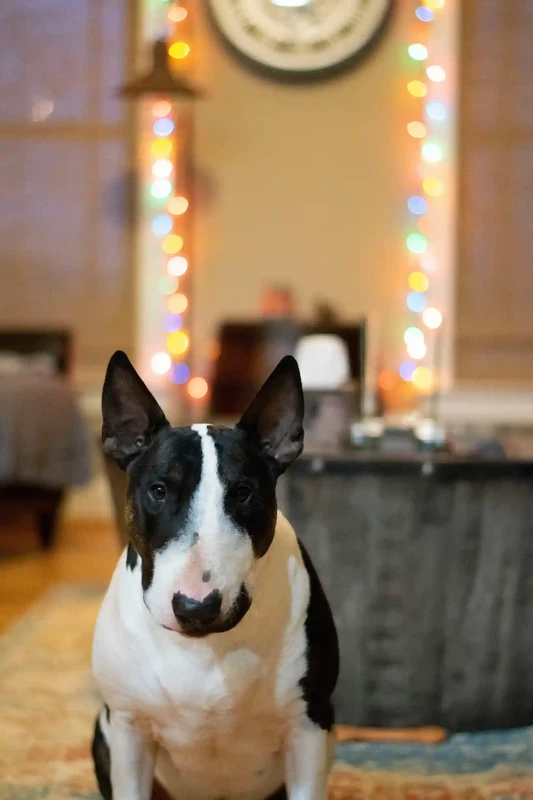
The Bull Terrier was created in nineteenth-century England by crossing the old bull-and-terrier with the now extinct White English Terrier. James Hinks set out to build an all-white, athletic dog with an egg-shaped head, and the breed was recognised in Britain in 1887. Coloured dogs were added in the twentieth century and were registered as Staffordshire Bull Terriers. The Bull Terrier became famous as a sporting and army mascot and later as a stylish urban companion.
Lifestyle
Walks: About an hour and a half a day, with brisk walking and games. A Bull Terrier is strong, so train it early to walk on a loose lead. Keep it on a lead around other dogs.
Being alone: It needs its people and does not like being left alone for long. Left bored, it may chew, dig or create its own entertainment.
At home: A true family companion that wants to be where you are, often on the sofa or on your feet. It is lively indoors when young, and calms down with age.
Children: Playful, affectionate and often devoted to children in its own family. Because it is strong and bouncy, always supervise play with small kids.
Other animals: It can get along with other dogs if it is socialised early, but some are pushy or dislike unfamiliar dogs. Introductions to cats and small pets should be careful.
Play and activities: Fetch with sturdy toys, tug games, agility and tricks suit it. It learns best from short, fun, rewarded sessions, and it needs plenty of toys to keep its mind busy.
Daily routine: Active morning and evening, with naps in between. Keep a regular routine, and give it jobs and games so it does not make its own fun.
Care essentials
Practical advice, not a medical opinion. For any health question, ask your vet.
Coat: The short coat only needs brushing once a week. After a bath, dry the dog thoroughly.
Worth knowing: White dogs can get sunburnt, so give them shade in strong sun and apply a dog-safe sunscreen to exposed skin. Choose a mild shampoo for sensitive skin: the skin of white Bull Terriers often reacts to ordinary products. It dislikes the cold, so put clothes on it in winter.
More about everyday health in the dog health & care guide.
Fun facts
The egg-shaped head is one of the breed's most recognisable features. The Bull Terrier has practically no marked stop between forehead and nose, which gives the profile a smooth, unusual look.
Spuds MacKenzie, the advertising character of the Bud Light beer brand in the 1980s, was a Bull Terrier. This party-loving dog became one of the most famous dogs in American advertising.
The breed was developed in England by crossing the Old English Bulldog with the now extinct English White Terrier. Other breeds, including the Dalmatian, later took part in the breeding.
FAQ
This breed is a great fit if you
- Want a playful, affectionate companion
- Are active and enjoy daily exercise and games
- Can give consistent, positive training from puppyhood
- Are at home for much of the day
It may not be a fit if you
- Are away from home most of the day
- Want a dog that is calm and easy for a first-time owner
- Have small pets
- Cannot give regular company and attention
Is it suitable for allergy sufferers?
Noticeable shedding. No dog is completely hypoallergenic: allergens come from saliva, skin and dander, not only from hair. Reactions are individual, so spend time with the dog before you decide and talk to an allergist if you are unsure.
Which breeds are similar to Bull Terrier?
Chosen from all groups: breeds of the same size, ordered by how closely their coat length, coat type and activity level match. The notes show how each breed differs from this one.
- American Staffordshire Terriervery similar overall
- Portuguese Podengovery similar overall
- Sloughiquieter
- Whippetlighter, quieter
- American Pit Bull Terriermore energetic
Compare Bull Terrier with another breed
Which other breeds might suit me?
Visit the Breeds page: with the filters and the quiz there you can get to know the breeds better.