Origins
The German Shorthaired Pointer comes from nineteenth-century Germany, where hunters needed one dog for everything: pointing, retrieving, tracking and water work. The breed was built from old German pointing dogs, hounds and water dogs, and Prince Albrecht zu Solms-Braunfels helped to guide its development. The first stud book was published in 1872. It was recognised in the United States in 1930 and is now one of the most versatile hunting breeds in the world.
Lifestyle
Walks: Two hours or more a day, with real running, swimming or cycling alongside. Without enough exercise it becomes restless and destructive.
Being alone: It needs company and activity. Left alone and bored, it may bark, chew or dig.
At home: Friendly and affectionate indoors, with a strong wish to be with the family. It is calm only when well exercised.
Children: Playful and good-natured with children, though its energy and bounce can knock over small kids. Teach children not to run and shriek around it, and supervise games, because it can be rough when excited.
Other animals: Usually friendly with dogs. Cats and small pets may trigger the chase, so socialise early.
Play and activities: Fetch, swimming, agility, tracking, field work and obedience. It learns quickly, so give it a real job.
Daily routine: Active outings morning and evening and play and training between. A fixed routine with a hard run, a training session and quiet time keeps it balanced.
Care essentials
Practical advice, not a medical opinion. For any health question, ask your vet.
Coat: Brush the short coat once a week. After the field, check the coat, paws and belly for thorns and burrs. Bathe as needed with a mild shampoo.
Ears, paws and teeth: Check the ears and wipe them after muddy walks.
More about everyday health in the dog health & care guide.
Fun facts
This breed is considered a true all-round gundog: it can point, retrieve game from land and water, and track wounded animals by scent.
German Shorthaired Pointers appeared in the United States in the 1920s, and the breed was entered in the American Kennel Club (AKC) stud book in 1930.
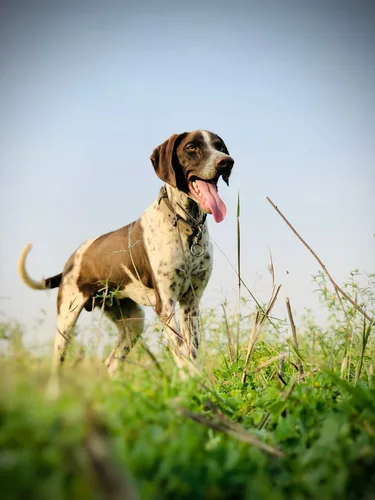
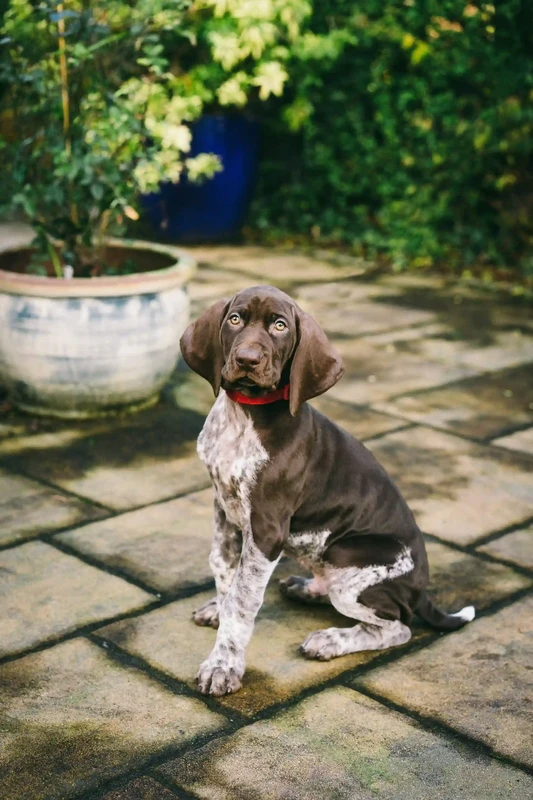
One of the breed's characteristic features is its ticked coat. The base colour is covered with many small flecks of another shade, which create a characteristic marbled pattern.
FAQ
This breed is a great fit if you
- Are very active and love running or hiking
- Enjoy training and dog sports
- Have a secure fence
- Are home a lot
It may not be a fit if you
- Want a calm dog for a small flat
- Are away from home most of the day
- Have small pets
- Cannot give daily running and training
Is it suitable for allergy sufferers?
Noticeable shedding. No dog is completely hypoallergenic: allergens come from saliva, skin and dander, not only from hair. Reactions are individual, so spend time with the dog before you decide and talk to an allergist if you are unsure.
Which breeds are similar to German Shorthaired Pointer?
Chosen from all groups: breeds of the same size, ordered by how closely their coat length, coat type and activity level match. The notes show how each breed differs from this one.
- Bluetick Coonhoundvery similar overall
- Dobermannheavier
- English Pointervery similar overall
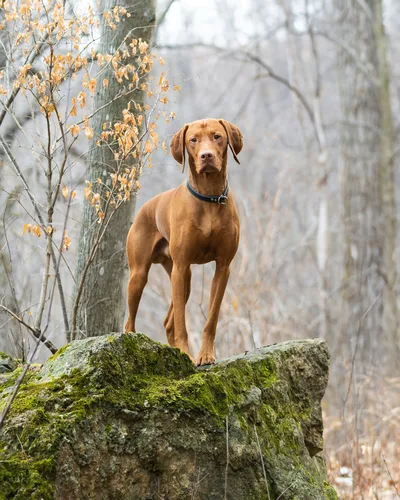
- Hungarian Short-Haired Pointer (Vizsla)very similar overall
- Treeing Walker Coonhoundvery similar overall
Compare German Shorthaired Pointer with another breed
Which other breeds might suit me?
Visit the Breeds page: with the filters and the quiz there you can get to know the breeds better.