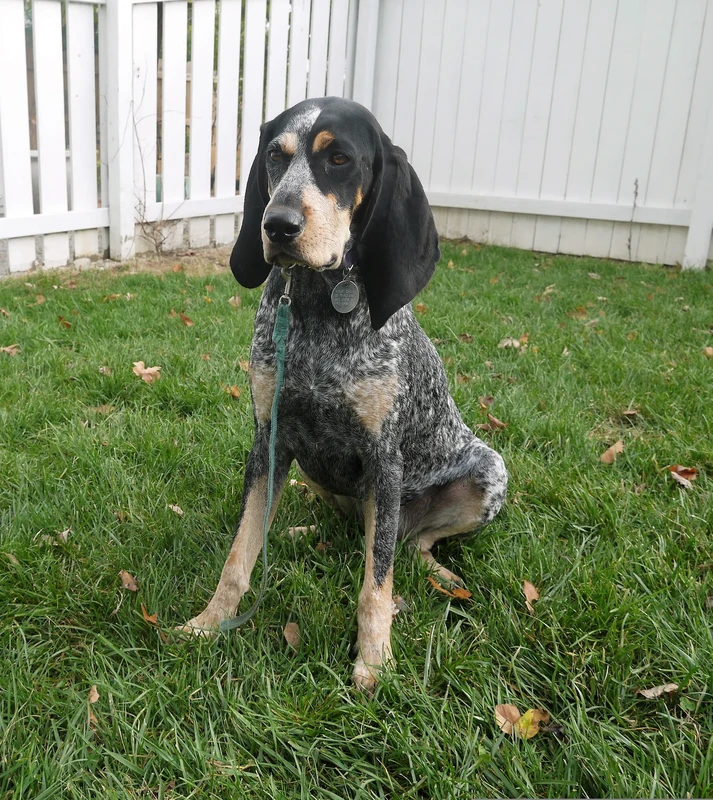
Origins
The breed was put together in the United States, mainly in Louisiana and the South, from French hounds — above all the Grand Bleu de Gascogne — crossed with English and American foxhounds and with the black-and-tan Virginia foxhound. The aim was a dog with a good nose, the stamina to trail all night and the sense to stay on the scent in swamps and thickets. Blue ticking became its trademark, and the United Kennel Club registered the Bluetick Coonhound in 1946; it has been the state dog of Tennessee since 1965. The AKC admitted the breed to its Hound Group in 2009; the FCI does not recognise it.
Lifestyle
Walks: Two hours or more a day, with chances to use its nose. Keep it on a lead or long line, as it follows a scent far.
Being alone: It does not like long hours alone and may bay, dig or chew. Company and exercise help.
At home: Calm and affectionate indoors once exercised, happy to lie near the family. It likes to lie near the family on a sturdy bed or the sofa, and a tired Bluetick sleeps deeply.
Children: Gentle and patient with children, though its size and energy need supervision with small ones. Teach children to play calmly and not to tug its ears, and supervise small ones, as a big, happy hound can knock them over.
Other animals: Typically friendly with dogs, as it comes from a pack. Cats and small pets may trigger the chase.
Play and activities: Scent tracking, long walks, hiking and swimming. Training takes patience and food rewards.
Daily routine: A long outing morning and evening and quiet company between. A long walk or a scent search in the morning, a long rest and another good outing in the evening suit it.
Care essentials
Practical advice, not a medical opinion. For any health question, ask your vet.
Coat: Brush the short, glossy coat once a week. After walks, check the coat and ears for burrs and ticks. Bathe as needed: a short coat dries quickly.
Ears, paws and teeth: Once a week, clean the long ears and check the claws.
More about everyday health in the dog health & care guide.
Fun facts
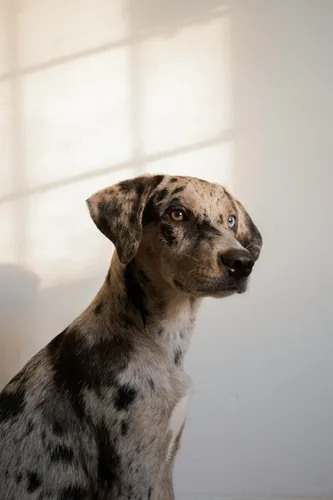
The bluish shade of the coat comes from black flecks on a white background. This pattern is called blue ticking and gave the breed its name.
The Bluetick Coonhound is the official dog of the state of Tennessee. It received this status in 2019.
Among the breed's ancestors was the French Grand Bleu de Gascogne. From it the Bluetick inherited not only part of its appearance but also its characteristic loud, rolling voice, which hunters can hear from a long way off.
FAQ
This breed is a great fit if you
- Are very active and love the outdoors
- Have a secure garden and a high fence
- Enjoy scent games and tracking
- Want a friendly, laid-back family dog
It may not be a fit if you
- Live in a flat or near noise-sensitive neighbours
- Want a dog that comes back every time
- Have cats or small pets
- Are away from home most of the day
Is it suitable for allergy sufferers?
Moderate shedding. No dog is completely hypoallergenic: allergens come from saliva, skin and dander, not only from hair. Reactions are individual, so spend time with the dog before you decide and talk to an allergist if you are unsure.
Which breeds are similar to Bluetick Coonhound?
Chosen from all groups: breeds of the same size, ordered by how closely their coat length, coat type and activity level match. The notes show how each breed differs from this one.
- Dobermannvery similar overall
- English Pointerquieter
- German Shorthaired Pointervery similar overall
- Hungarian Short-Haired Pointer (Vizsla)lighter, quieter
- Treeing Walker Coonhoundvery similar overall
Compare Bluetick Coonhound with another breed
Which other breeds might suit me?
Visit the Breeds page: with the filters and the quiz there you can get to know the breeds better.