Origins
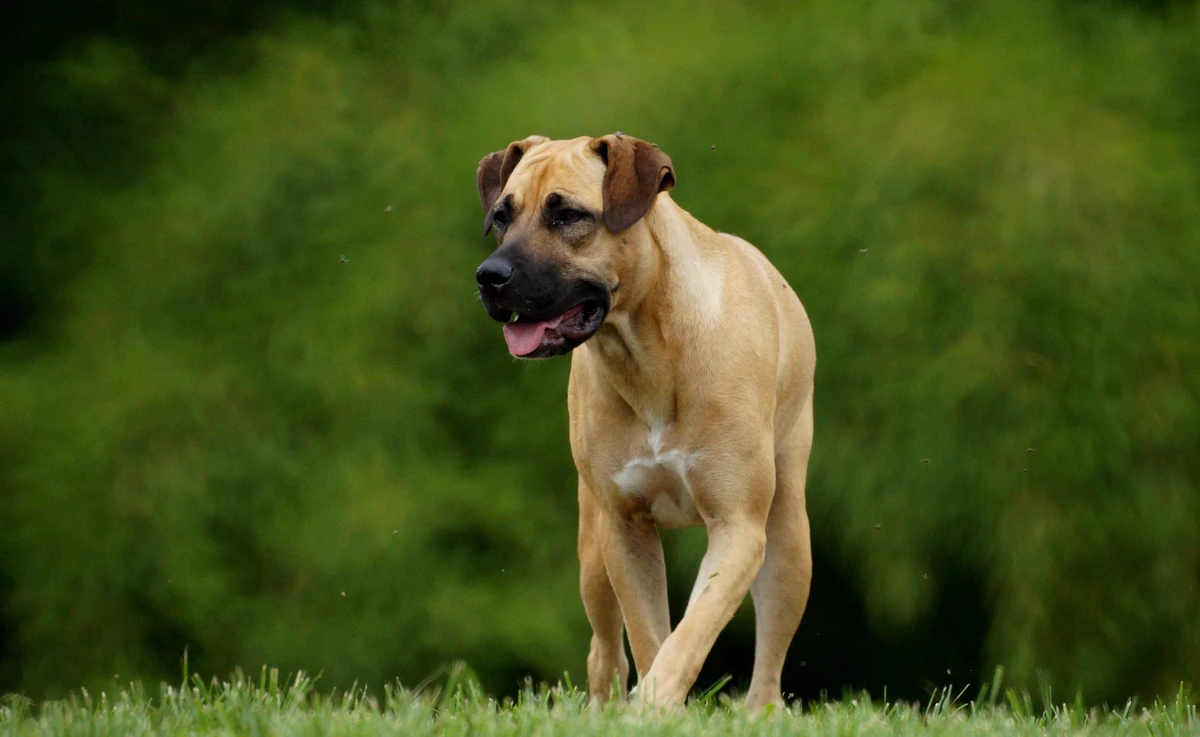
The Boerboel is the only South African mastiff breed. The name comes from the Boers — Dutch, German and Huguenot farmers who settled the Cape from the 17th century. They brought large guard dogs with them, bullenbijters among others, and these mixed over three centuries of farm life with local dogs and later with mastiff and bulldog types. The result was a general-purpose farm dog: guard, cattle dog, hunter and family companion. In the 1980s South African breeders began to record the type seriously, and the South African Boerboel Breeders' Society was founded in 1983 to keep a single standard. The FCI does not recognise the breed; the AKC admitted it to its Working Group in 2015.
Lifestyle
Walks: About an hour and a half a day of walking and training. Teach loose-lead walking early, because an adult is very strong.
Being alone: It bonds closely with its family. It needs company, and bored, it may chew or dig.
At home: Calm and watchful at home, protective and reserved with strangers. It needs space.
Children: Gentle and patient with its own family's children, but its size means supervision with small kids and visitors. Teach children to respect its space and never leave small kids alone with such a large dog, however gentle it is.
Other animals: Can be dominant with unfamiliar dogs. Early socialisation and controlled introductions are essential.
Play and activities: Long walks, basic obedience and calm routines. Training should be firm, fair and reward-based.
Daily routine: Walks morning and evening and long rests in between. It does not tolerate heat well.
Care essentials
Practical advice, not a medical opinion. For any health question, ask your vet.
Coat: Brush the short coat once a week.
Ears, paws and teeth: Clean the folds on the muzzle and the ears, and watch the weight to protect the joints. The paw pads wear down quickly on hard paths and tarmac, so check them after walks.
Worth knowing: The bed needs to be thick and sturdy: a large dog is uncomfortable on a bare floor. In hot weather avoid heavy exercise.
Joints: Large breeds more often have problems with the hip and elbow joints. While the puppy is growing, avoid long runs and jumping, and keep its weight normal throughout its life.
More about everyday health in the dog health & care guide.
Fun facts
The breed's name comes from the Afrikaans word boerboel, meaning "farmer's dog". Boerboels were used to guard South African farms from predators, including leopards and baboons.
The Boerboel's ancestors arrived in South Africa with Dutch settlers in the 17th century. Over time they were crossed with local dogs, adapting to the conditions of the region.
An adult Boerboel can weigh about 50–90 kg. Despite its imposing size, a well-trained dog usually behaves calmly and prefers to watch what is going on, stepping in only when there is a real threat.
FAQ
This breed is a great fit if you
- Have experience with giant, strong breeds
- Can give calm, firm and consistent training from puppyhood
- Have a large property and a very secure fence
- Want a calm, protective family guardian
It may not be a fit if you
- Are a first-time owner
- Want a dog that welcomes every visitor
- Live in a flat
- Cannot afford the costs of a giant breed
Is it suitable for allergy sufferers?
Moderate shedding. No dog is completely hypoallergenic: allergens come from saliva, skin and dander, not only from hair. Reactions are individual, so spend time with the dog before you decide and talk to an allergist if you are unsure.
Which breeds are similar to Boerboel?
Chosen from all groups: breeds of the same size, ordered by how closely their coat length, coat type and activity level match. The notes show how each breed differs from this one.
- Bloodhoundlighter, barks more
- Great Danevery similar overall
- Greyhoundlighter
- Kangal Shepherd Doglighter, barks more
- Rottweilerlighter
Compare Boerboel with another breed
Which other breeds might suit me?
Visit the Breeds page: with the filters and the quiz there you can get to know the breeds better.