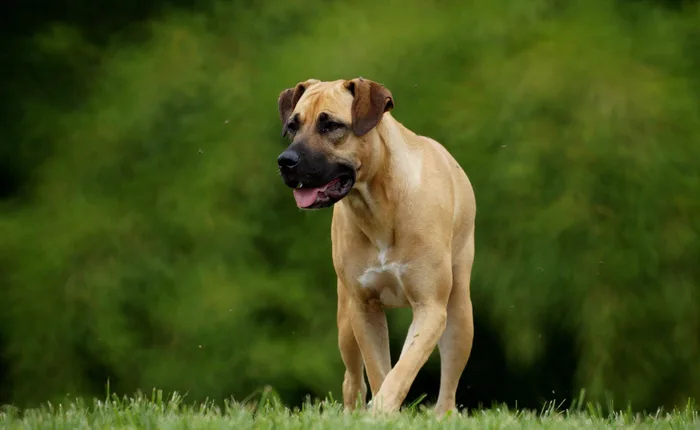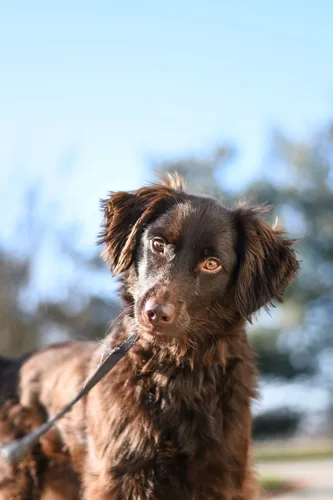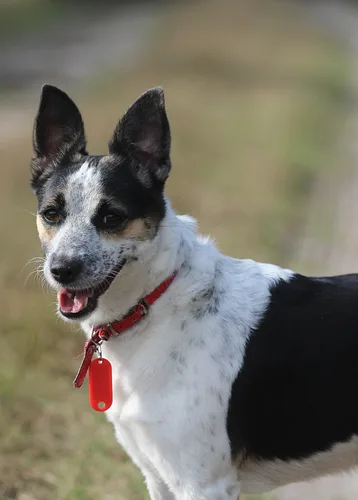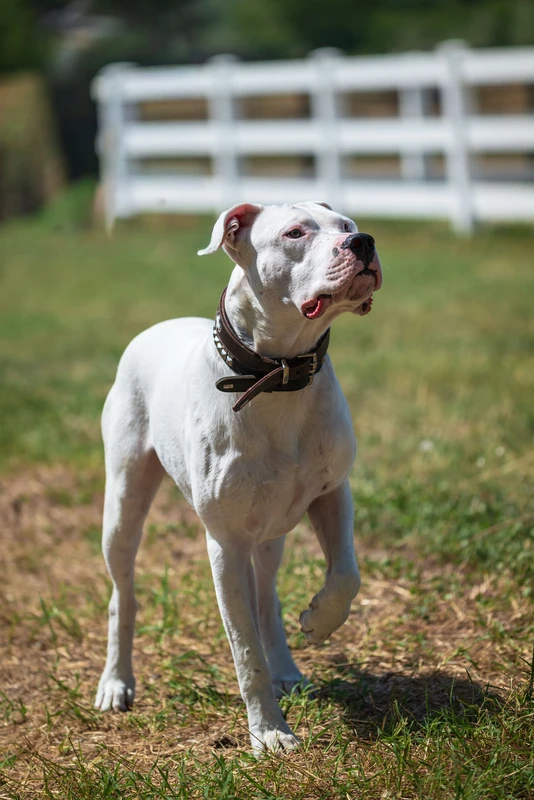
Origins
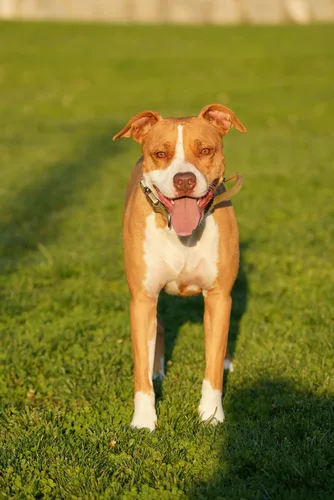
The American Bulldog comes from the working bulldogs that British and Irish settlers brought to the southern United States in the 18th and 19th centuries. On farms the dog was not a fighter but a catch dog: it found feral hogs and cattle, caught them by the ear or nose and held them until people arrived. By the second half of the 20th century the type was close to disappearing, and two breeders are usually credited with saving it — John D. Johnson, whose heavier «bully» type still carries his name, and Alan Scott, who kept a leaner, more agile working type. The FCI does not recognise the breed: it is registered by other kennel clubs and remains, above all, a practical farm and family guard dog.
Lifestyle
Walks: About an hour and a half a day of walks and games. It is strong, so teach loose-lead walking early and use a sturdy harness.
Being alone: It bonds closely with its family and dislikes long hours alone. Bored, it may chew or dig.
At home: Calm and affectionate indoors once exercised, and happy to stay close to the family. It may snore and drool a little.
Children: Loyal, patient and protective with its family's children, but its size and strength mean supervision with small kids. Teach children to play calmly and never leave small kids alone with it, because a strong dog can knock them over without meaning to.
Other animals: Can be dominant with unfamiliar dogs, especially of the same sex. Early socialisation and a lead outdoors are important.
Play and activities: Fetch, tug with rules, walks and basic obedience. Training should be firm, fair and reward-based.
Daily routine: Active morning and evening and long rest in between. A brisk walk and training in the morning, a nap in the day and a game in the evening keep it balanced.
Care essentials
Practical advice, not a medical opinion. For any health question, ask your vet.
Coat: The short coat does not need complicated care: it is enough to brush it regularly with a soft brush or a rubber mitt. For shine, after brushing wipe the coat with a damp palm or a soft cloth.
Ears, paws and teeth: Pay special attention to the folds on the muzzle: they must be cleaned gently and dried to avoid irritation. Also check the ears regularly, clean the teeth and trim the claws. After walks, check the paw pads.
Joints: Large breeds more often have problems with the hip and elbow joints. While the puppy is growing, avoid long runs and jumping, and keep its weight normal throughout its life.
More about everyday health in the dog health & care guide.
Fun facts
The American Bulldog was bred as an all-round farm dog in the southern United States: it guarded the homestead, helped manage livestock and caught feral hogs.
Today American Bulldogs are divided into two main types: the more massive "bully" and the lighter, athletic working type.
The American Bulldog can jump vertically to a height of more than 90 cm. This jumping ability is linked to its well-developed muscles and athletic build.
FAQ
This breed is a great fit if you
- Have experience with strong dogs
- Can give calm, consistent training and socialisation
- Have a secure garden and a high fence
- Want a loyal, protective family dog
It may not be a fit if you
- Are a first-time dog owner
- Want a dog that welcomes every dog
- Live in a hot climate without cooling
- Are away from home most of the day
Is it suitable for allergy sufferers?
Moderate shedding. No dog is completely hypoallergenic: allergens come from saliva, skin and dander, not only from hair. Reactions are individual, so spend time with the dog before you decide and talk to an allergist if you are unsure.
Which breeds are similar to American Bulldog?
Chosen from all groups: breeds of the same size, ordered by how closely their coat length, coat type and activity level match. The notes show how each breed differs from this one.
- Boxerbarks more, sheds more
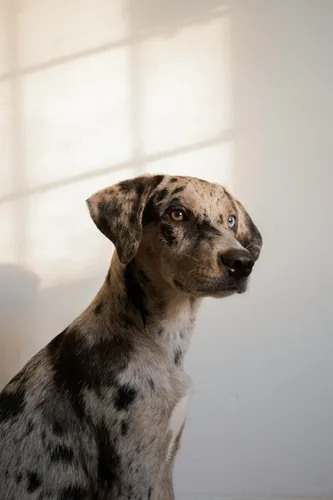
- Catahoula Leopard Dogbarks more, sheds more
- Dalmatianbarks more
- Italian Cane Corsobarks more
- Rhodesian Ridgebackvery similar overall
Compare American Bulldog with another breed
Which other breeds might suit me?
Visit the Breeds page: with the filters and the quiz there you can get to know the breeds better.