Origins
The Cavalier King Charles Spaniel revives the small toy spaniels painted beside European nobility in the sixteenth and seventeenth centuries. King Charles II was so fond of them that the type was named after him. By the twentieth century the flat-faced English Toy Spaniel had replaced the old look, and American breeders offered a prize for dogs with the long muzzle of the old paintings. The Cavalier was recognised in Britain in 1945 and has since become one of the most popular companion breeds.
Lifestyle
Walks: About an hour a day with gentle walks and games. It enjoys running and sniffing, but needs a lead near roads, as a bird or bunny may tempt it.
Being alone: It needs company and can become anxious when left alone for long. Build up time alone gradually and leave it with a toy, because a Cavalier that is always alone is an unhappy one.
At home: A loving lap dog that wants to be on the sofa or in the bed. It follows the family from room to room.
Children: Gentle, patient and friendly with children. A good family dog when handled kindly.
Other animals: Typically friendly with dogs, cats and visitors. Socialise it early and it will greet cats, dogs and guests with the same wagging tail.
Play and activities: Walks, fetch, trick training and scent games. It is eager to please and learns with praise.
Daily routine: Two walks, play and plenty of company with naps between. Two walks, a game and a lot of quiet time on the sofa with you make a perfect day for a Cavalier.
Care essentials
Practical advice, not a medical opinion. For any health question, ask your vet.
Coat: Brush the silky coat three or four times a week, and check and clean the long ears once a week. Wipe the hair on the ears with a damp wipe after meals so it does not stick together.
Ears, paws and teeth: A bowl with a narrow top is more convenient for meals: the ears do not fall inside.
Worth knowing: Watch the weight.
Heart: The breed is prone to mitral valve disease of the heart. From about five years old, take the dog to the vet for a heart check once a year.
More about everyday health in the dog health & care guide.
Fun facts
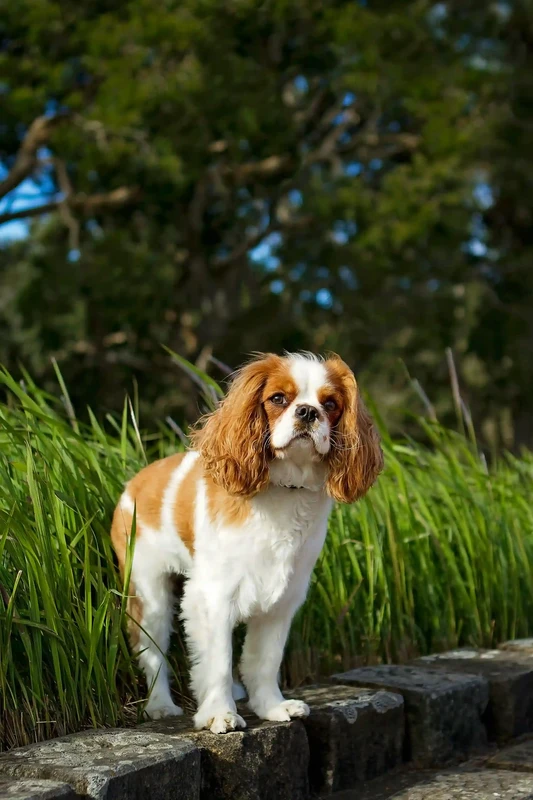
The Cavalier King Charles Spaniel comes in four colours: Blenheim (chestnut and white), tricolour, ruby and black and tan.
The Cavalier has a silky coat with feathering on the ears, chest and legs, and long drooping ears.
Blenheim dogs often have a round chestnut mark on the forehead. It is called the "Blenheim spot" or "lozenge"; according to legend, it came from the thumbprint of the Duchess of Marlborough, who was waiting for her husband to return.
FAQ
This breed is a great fit if you
- Want a gentle, sociable family dog
- Are home often
- Enjoy walks and cuddles
- Do not mind regular brushing
It may not be a fit if you
- Are away from home most of the day
- Are not ready for possible heart and health costs
- Want a guard dog
- Want a dog that needs little contact
Is it suitable for allergy sufferers?
Noticeable shedding. No dog is completely hypoallergenic: allergens come from saliva, skin and dander, not only from hair. Reactions are individual, so spend time with the dog before you decide and talk to an allergist if you are unsure.
Which breeds are similar to Cavalier King Charles Spaniel?
Chosen from all groups: breeds of the same size, ordered by how closely their coat length, coat type and activity level match. The notes show how each breed differs from this one.
- Bedlington Terrierheavier
- Brussels Griffonlighter
- Scottish Terrierheavier
- Jack Russell Terriermore energetic
- Welsh Terriermore energetic, heavier
Compare Cavalier King Charles Spaniel with another breed
Which other breeds might suit me?
Visit the Breeds page: with the filters and the quiz there you can get to know the breeds better.