Origins
The Nederlandse Kooikerhondje is an old Dutch spaniel-type dog used to work duck decoys, the long funnel-shaped traps of the Netherlands. The dog lured ducks along the decoy channel with its white, feathered tail, then stayed silent while the keeper closed the trap. The breed nearly died out in the twentieth century and was rebuilt from a few dogs by Baroness van Hardenbroek van Ammerstol from 1939. The Netherlands recognised it in 1971, and it remains a rare but charming companion.
Lifestyle
Walks: An hour to an hour and a half a day with games and sniffing. It likes to run and has plenty of stamina.
Being alone: It bonds closely and dislikes long hours alone. It may bark or fret.
At home: Lively and affectionate indoors, with a sensitive nature that notices mood changes. It likes to be where the family is, but it often picks a quiet spot to watch from, and loud, hectic homes can unsettle it.
Children: Playful and loyal with children it knows, though it can be shy with strangers. Teach children to approach calmly and not to grab, since a sensitive dog trusts gentle people first.
Other animals: Usually fine with dogs it knows. Small pets can trigger a chase.
Play and activities: Agility, fetch, scent games and trick training. It learns quickly with praise and play.
Daily routine: Active walks morning and evening and play and company between. Two active walks with a game of fetch or a scent search, and calm time with the family in between, suit it well.
Care essentials
Practical advice, not a medical opinion. For any health question, ask your vet.
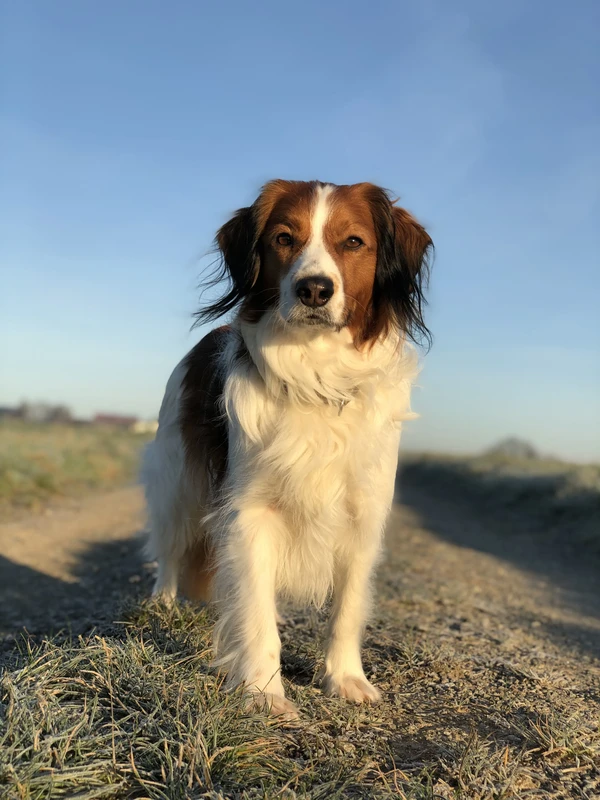
Coat: Brush the silky coat two or three times a week, especially the feathering. Dirt on the white and orange-red coat shakes off easily once it has dried. Brush the feathering on the ears gently, without pulling.
Ears, paws and teeth: Check the ears and claws.
More about everyday health in the dog health & care guide.
Fun facts
The Kooikerhondje historically helped hunters lure ducks into special traps called eendenkooi. The dog ran along the bank, attracting the birds' attention with its movements and the white tip of its tail, and curious ducks swam closer.
Dogs of this breed appear in Dutch paintings of the 17th century, including works by the painter Jan Steen.
The long black hairs at the tips of the Kooikerhondje's ears are called "earrings". This characteristic feature is mentioned separately in the breed standard.
FAQ
This breed is a great fit if you
- Are active and enjoy outings and play
- Want a small to medium family dog with spirit
- Can use gentle positive training
- Are home often
It may not be a fit if you
- Want a dog that is happy with strangers
- Are away from home most of the day
- Use harsh training
- Have noise-sensitive neighbours
Is it suitable for allergy sufferers?
Heavy shedding. No dog is completely hypoallergenic: allergens come from saliva, skin and dander, not only from hair. Reactions are individual, so spend time with the dog before you decide and talk to an allergist if you are unsure.
Which breeds are similar to Nederlandse Kooikerhondje?
Chosen from all groups: breeds of the same size, ordered by how closely their coat length, coat type and activity level match. The notes show how each breed differs from this one.
- Border Colliemore energetic, heavier
- German Spanielmore energetic, heavier
- Nova Scotia Duck Tolling Retrievermore energetic, heavier
- Kaiheavier, sheds less
- American Eskimo Dogmore energetic
Compare Nederlandse Kooikerhondje with another breed
Which other breeds might suit me?
Visit the Breeds page: with the filters and the quiz there you can get to know the breeds better.