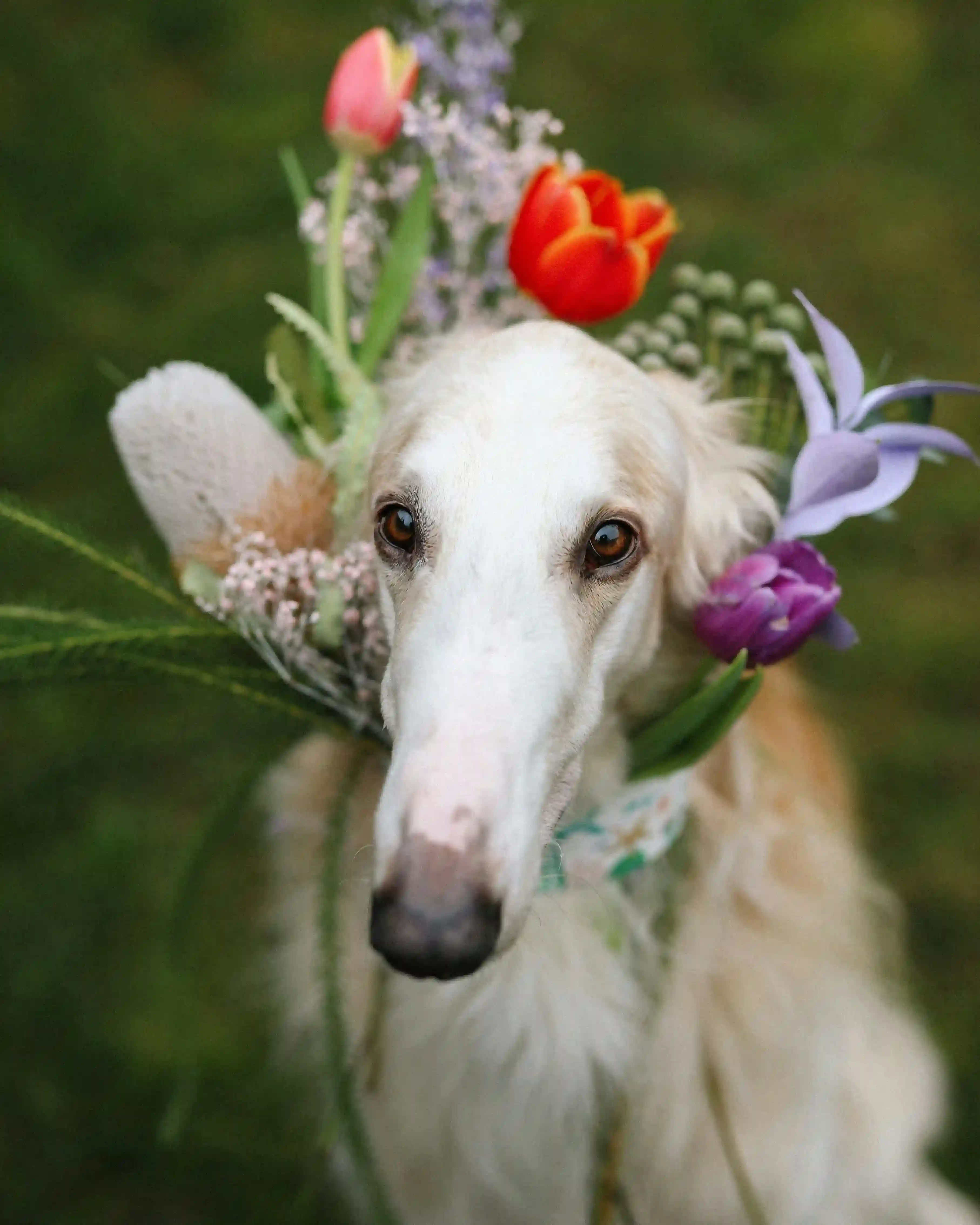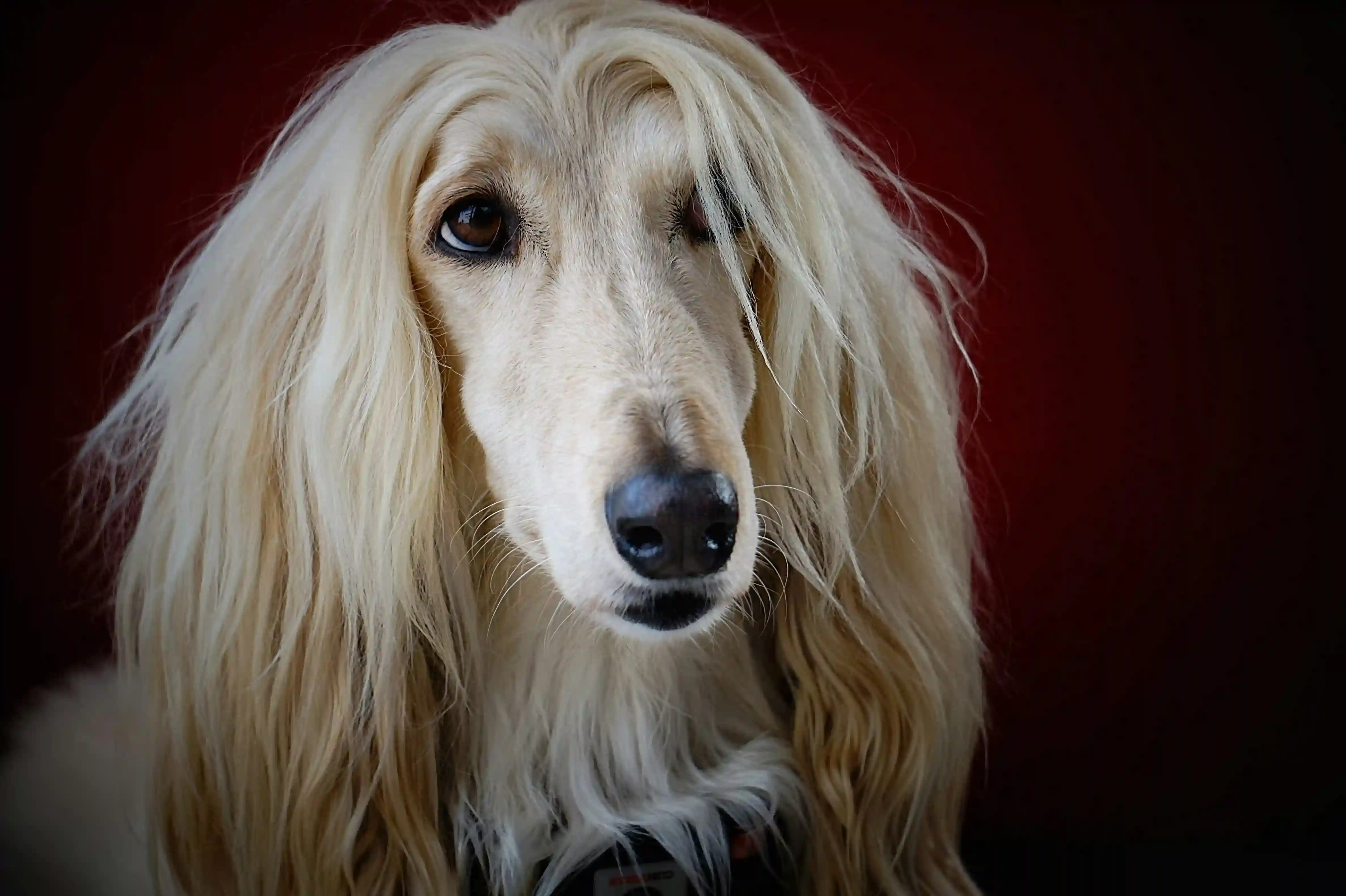
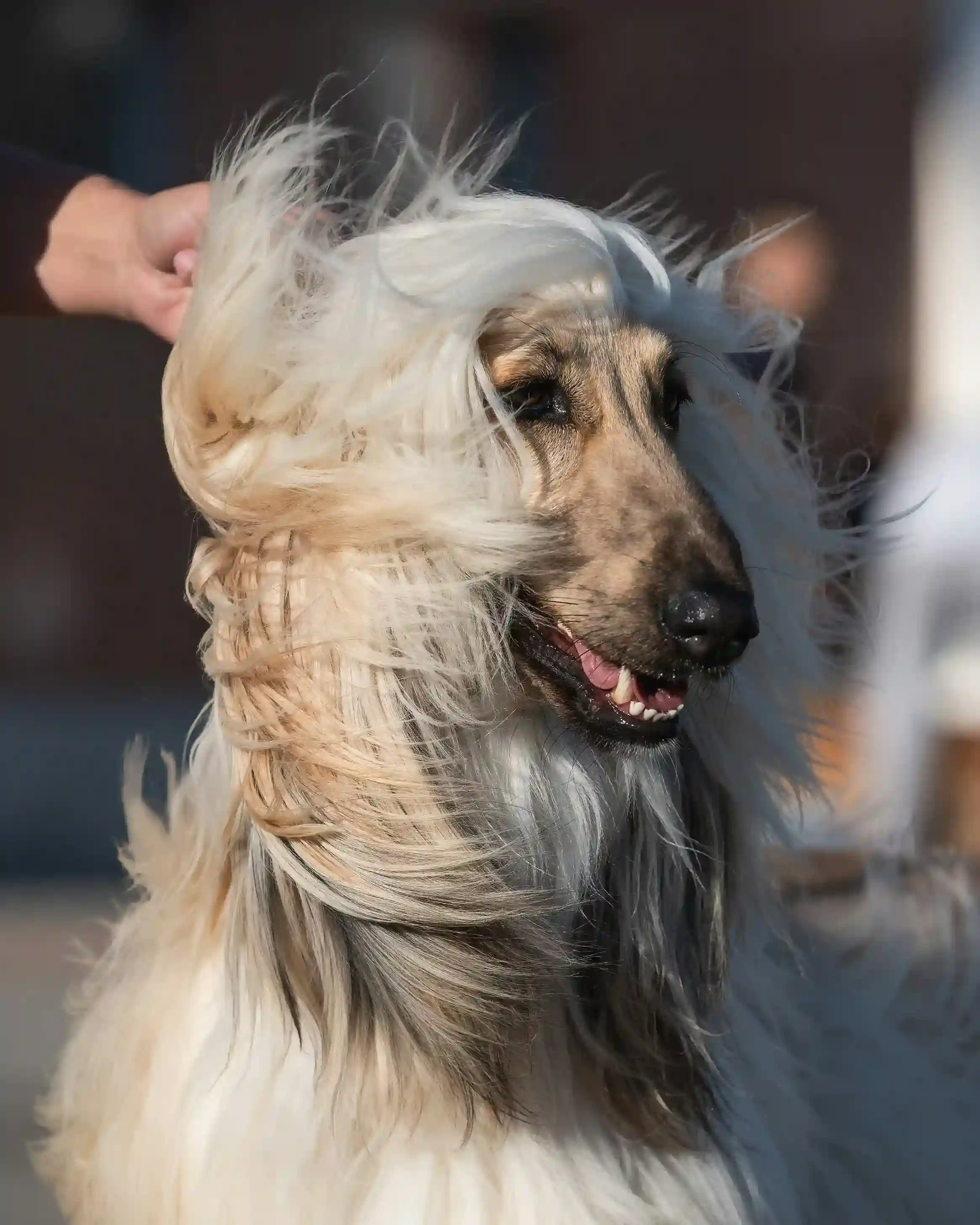
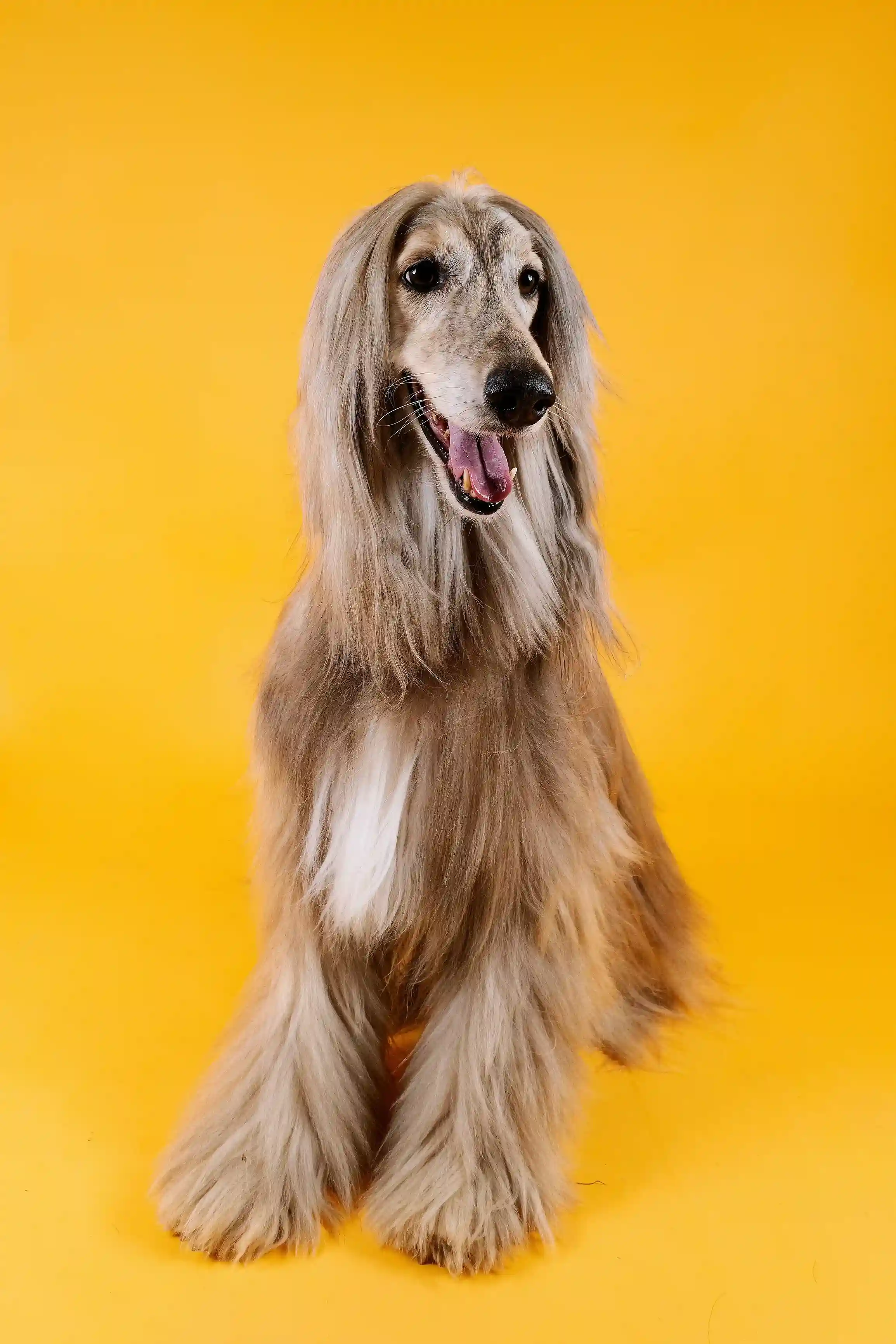
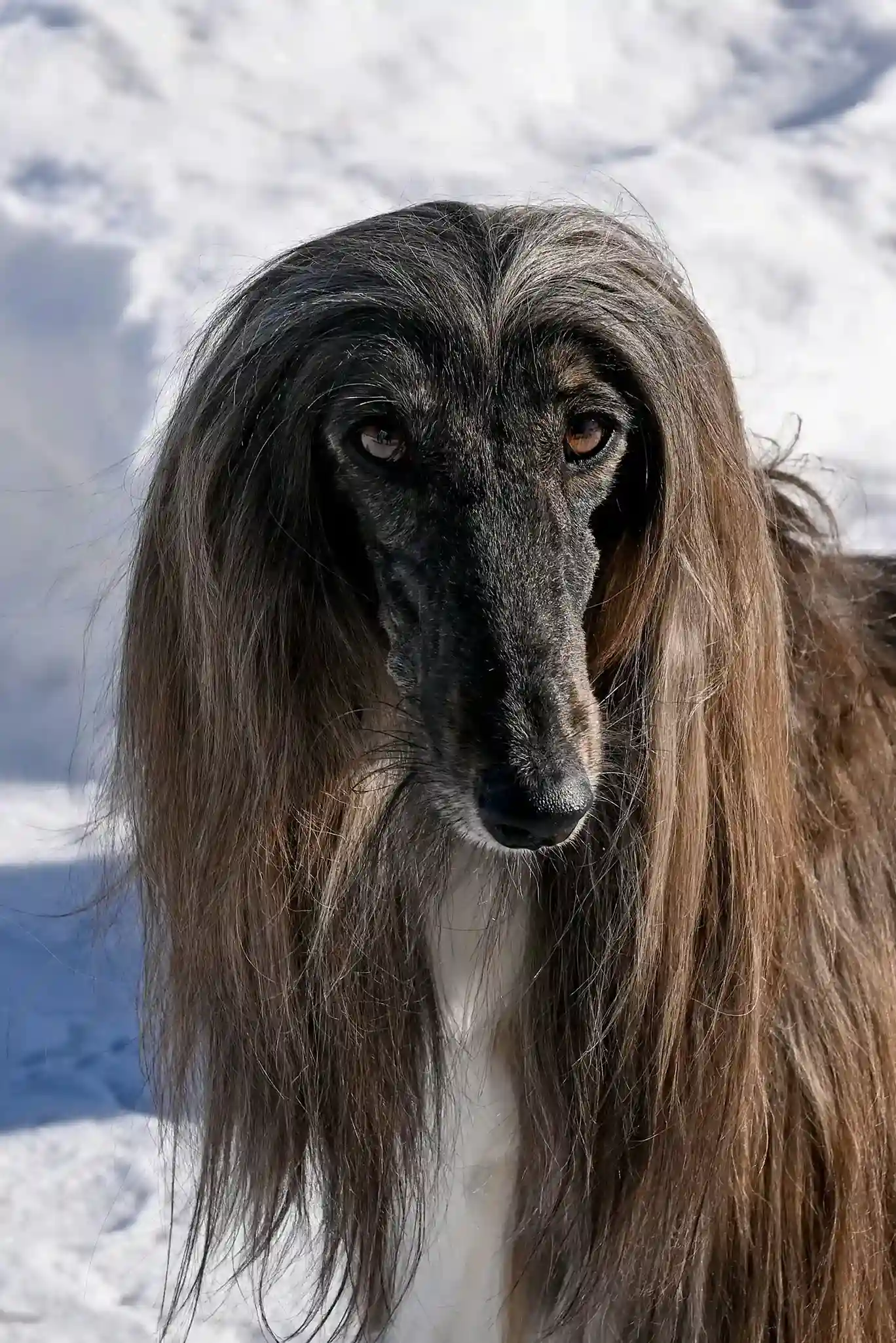
Summary: The Afghan Hound is a regal and elegant breed known for its long, flowing coat, proud posture, and exotic, aristocratic expression. Originally bred for hunting large game in the mountains of Afghanistan, this breed combines speed, agility, and endurance. Despite their aloof and independent nature, Afghan Hounds can form deep bonds with their families. They are often described as "cat-like" in their demeanor — graceful, quiet, and sometimes selective in their affection. Their unique look and dignified personality make them stand out in any setting.
Care: Afghan Hounds require meticulous grooming due to their fine, silky coat, which tends to mat easily. Daily brushing is ideal, and regular bathing (often weekly) helps keep their coat clean and healthy. Professional grooming is often recommended. Their ears should be checked and cleaned regularly, as their long fur can trap dirt and moisture. In terms of exercise, Afghan Hounds are an athletic breed and benefit from daily runs in a secure, fenced area. They also enjoy lure coursing and other activities that tap into their natural hunting instincts. Mental stimulation is important as well — they can become bored with repetitive training.
Conditions: Afghan Hounds are best suited for experienced dog owners who appreciate their grooming and exercise needs. They thrive in homes with ample space, ideally with a large, secure yard. While they can adapt to indoor living, they are not ideal for apartment life unless exercised diligently. Due to their sensitive nature, they may not respond well to harsh training methods — gentle, consistent handling works best. Afghan Hounds are also known for having a strong prey drive, so early socialization and leash training are crucial. Additionally, they can be sensitive to anesthesia and certain medications, so it's important to work with a vet familiar with the breed.
updated: Feb. 10, 2026, 3:09 p.m.